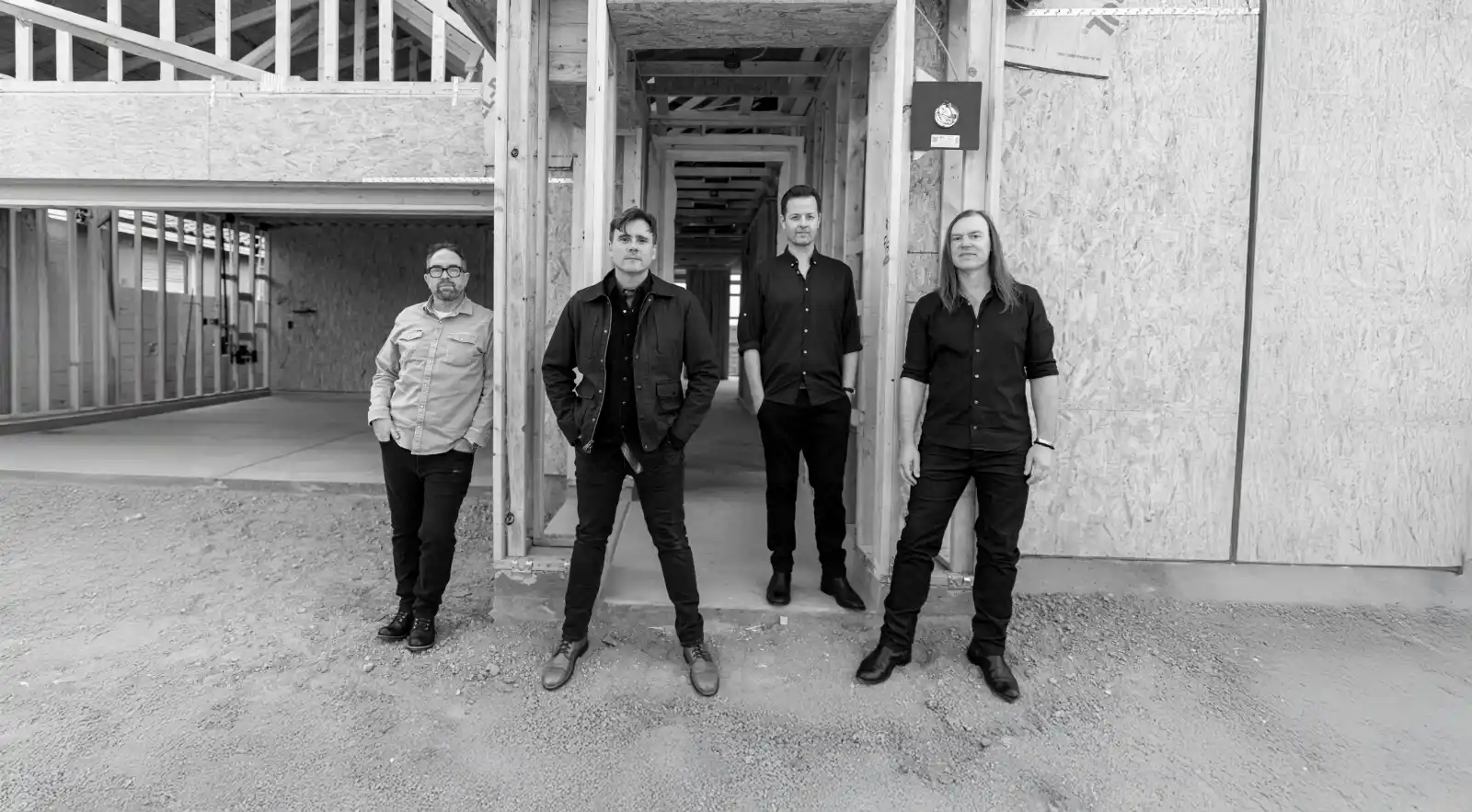
Some records capture a moment. Others outgrow it. Twenty-five years after Bleed American pushed Jimmy Eat World from the steady climb of clubs and support slots into a much larger international spotlight, the album still feels less like a relic of the early 2000s and more like a living part of the band’s story. Its guitars remain immediate, its melodies remain unmistakable, and songs such as “The Middle,” “Sweetness,” and “A Praise Chorus” continue to connect with listeners who may not have even been born when the album first arrived in 2001.
For Jimmy Eat World, that longevity was never part of a master plan. The Arizona band had already spent years developing its identity before Bleed American, learning through touring, experimentation, and the slow accumulation of experience. In Fusion Magazine’s conversation with vocalist and guitarist Jim Adkins and bassist Rick Burch, Adkins remembers a period when success was measured in much smaller increments: playing outside Arizona, opening for a slightly bigger band, or noticing a few more people in the room than the last time through town. There was momentum, but no expectation that one album would suddenly accelerate everything. That perspective is important to understanding Jimmy Eat World. Long before the group became associated with one of alternative rock’s defining crossover records, the musicians were building a band around curiosity rather than calculation. Adkins described those early days as being driven primarily by fun, while Burch recalled the freedom that came from not trying to satisfy an outside audience or industry expectation. That attitude allowed the group to become comfortable with its own instincts. By the time Bleed American took shape, Jimmy Eat World was not attempting to imitate a trend; they were making the record they believed in.
The circumstances surrounding the album only sharpened that independence. Following difficult experiences with the band’s previous record company situation, Jimmy Eat World entered the Bleed American period with uncertainty but also unusual creative freedom. The album was essentially made before a new label partnership determined its direction. Producer Mark Trombino, whom Burch credits as a major part of the record’s final sound, helped the band turn rough ideas and demos into a focused collection that could be intimate at one moment and enormous the next. Adkins remembers the thrill of hearing songs transform in the studio and become something greater than the first idea that existed in their heads.
THE NEW NOVEMBER ISSUE IS OUT NOW!
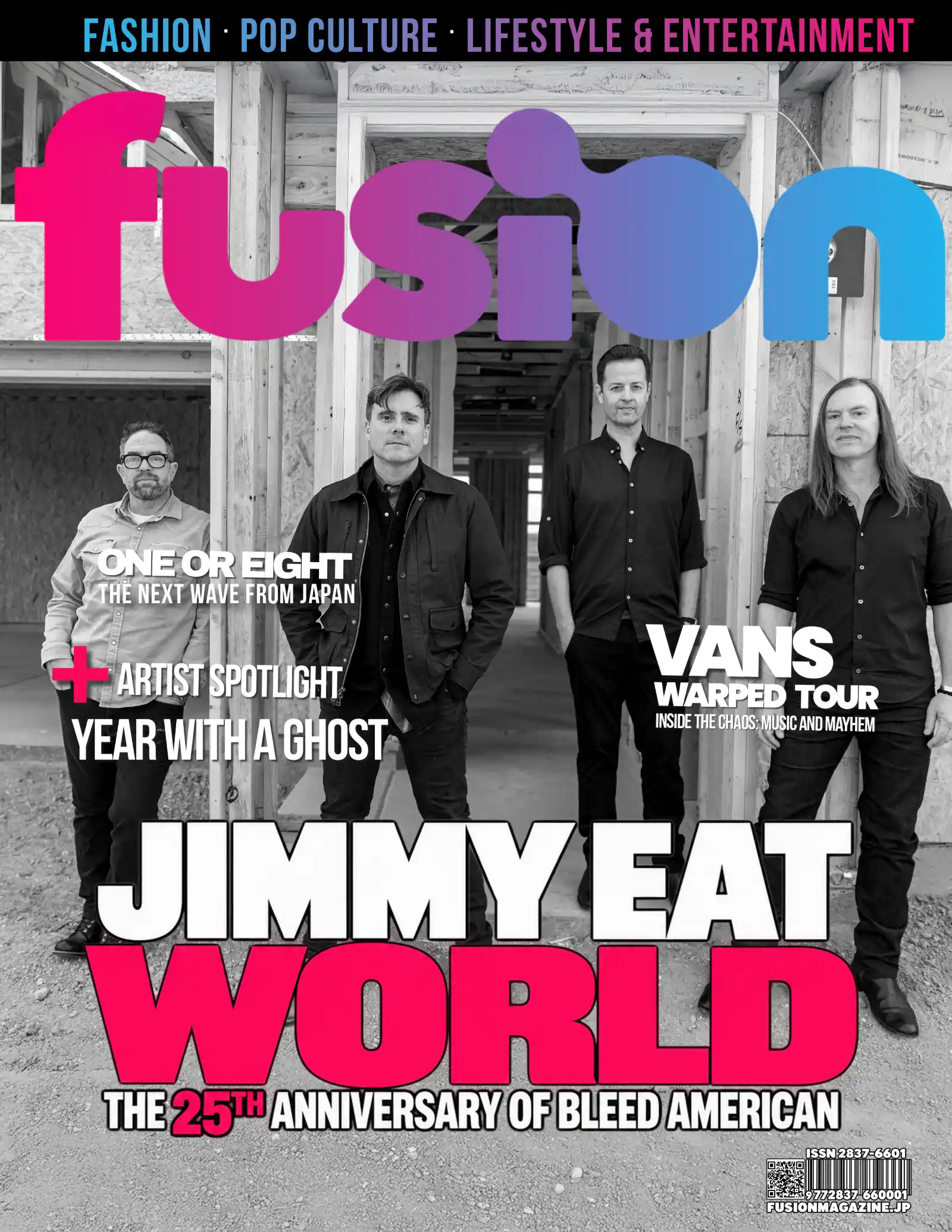
DON’T MISS OUR EXCLUSIVE 20-PAGE FEATURE WITH JIMMY EAT WORLD, INCLUDING AN IN-DEPTH INTERVIEW AND MORE FROM THE BAND. CHECK OUT THE FULL FEATURE IN THE NOVEMBER ISSUE OF FUSION MAGAZINE.
That process produced a record whose biggest songs became part of popular culture without erasing the depth around them. “The Middle” grew into a crossover anthem, while “Sweetness” became one of the band’s most recognizable live songs. Yet the members still speak with equal affection about less obvious moments. During our interview, Burch singled out “Cautioners,” a more introspective track that the band once found difficult to reproduce live with only four musicians. Years later, finally finding a way to make the song work on-stage—and watching an audience listen closely rather than simply wait for a hit—has given it another life.
The story behind “Sweetness” is equally revealing. Adkins told Fusion that the idea dates back to the Clarity era and was demoed before Bleed American, only to be passed over by the band’s label at the time. Nonetheless, Jimmy Eat World kept believing in the song. Its eventual success offered a quiet kind of vindication: evidence that trusting the band’s own judgment could matter more than an outside prediction about what would connect.
That confidence has carried Jimmy Eat World through the decades that followed. Rather than trying to recreate Bleed American every time they entered a studio, the group continued to treat each album as its own creative problem. Adkins described the standard in simple terms: the new work has to feel as meaningful and accomplished to the band as what came before, even when the sound or approach changes. Commercial outcomes are never completely controllable—the quality of the work, the care put into it and the feeling of personal reward are.
In 2026, Bleed America returned to the center of the conversation as it marked its 25th anniversary. Jimmy Eat World has celebrated the record in a way that connects its history to the present rather than treating the anniversary as nostalgia alone. The band appeared at Vans Warped Tour in Long Beach, California, revisiting a festival that was deeply connected to the original Bleed American era. Their official Warped Tour appearance framed the anniversary as a full-circle moment: a band returning to a setting that helped define an earlier chapter while performing for an audience that now spans multiple generations.
The band’s relationship with its listeners may be one of the clearest measures of what those 25 years mean. Burch told Fusion that the members could never have predicted that people who discovered the music when they were younger would eventually share it with their children. Adkins, with characteristic humor, offered the simpler version: seeing new generations singing along is considerably better than watching people walk out. Beneath the joke is something significant. Jimmy Eat World’s songs have moved beyond a single age group, scene or release cycle.