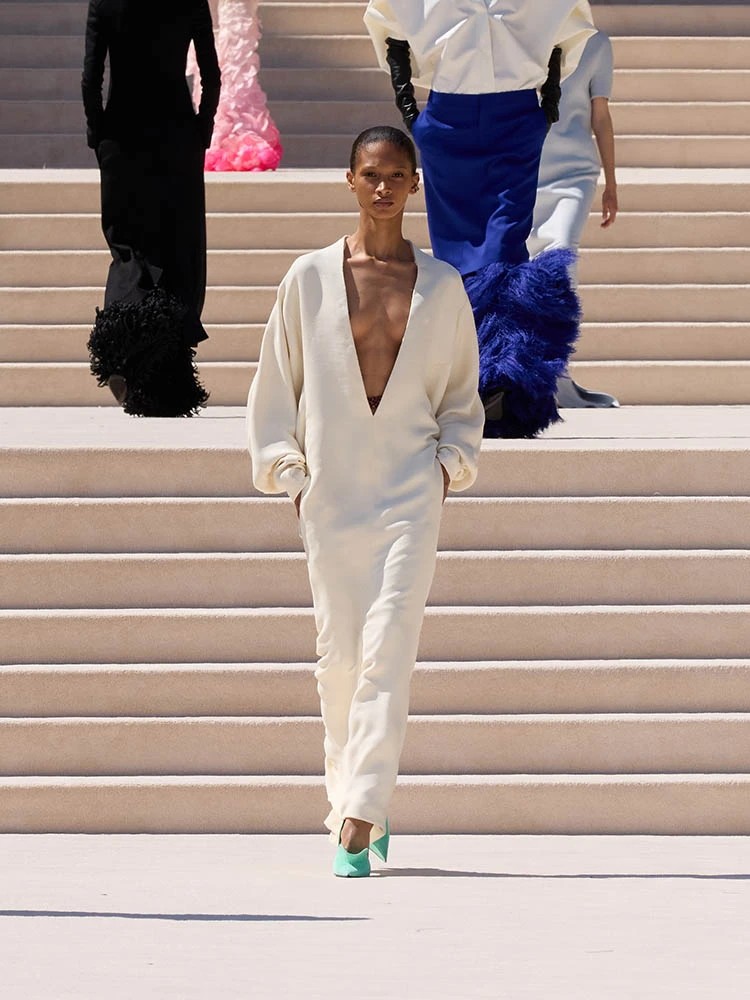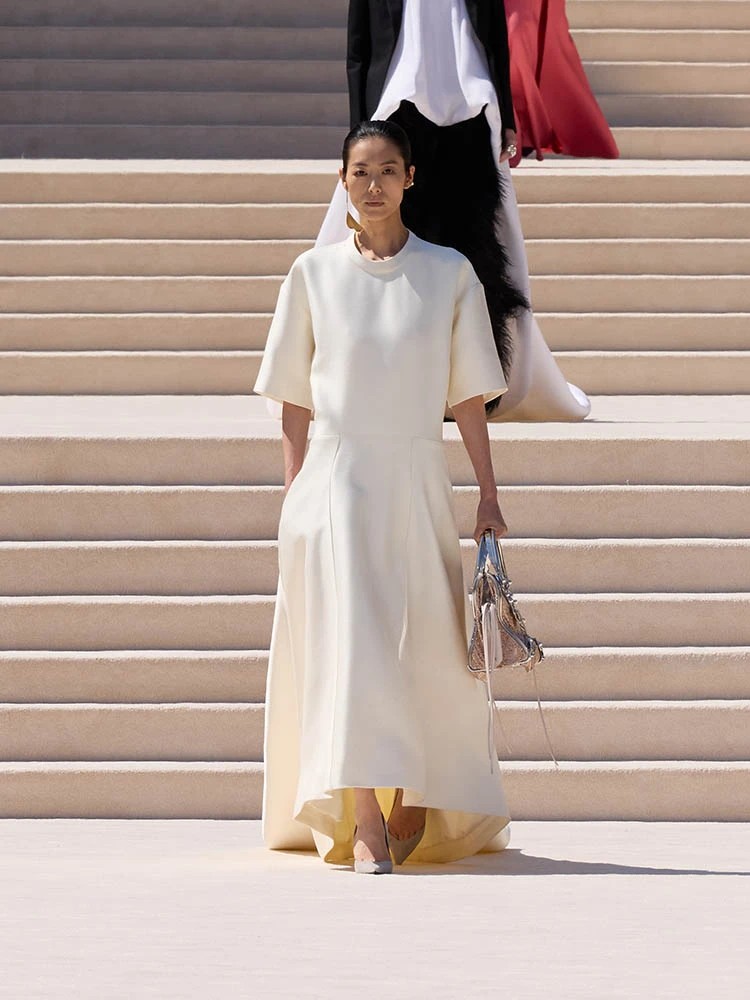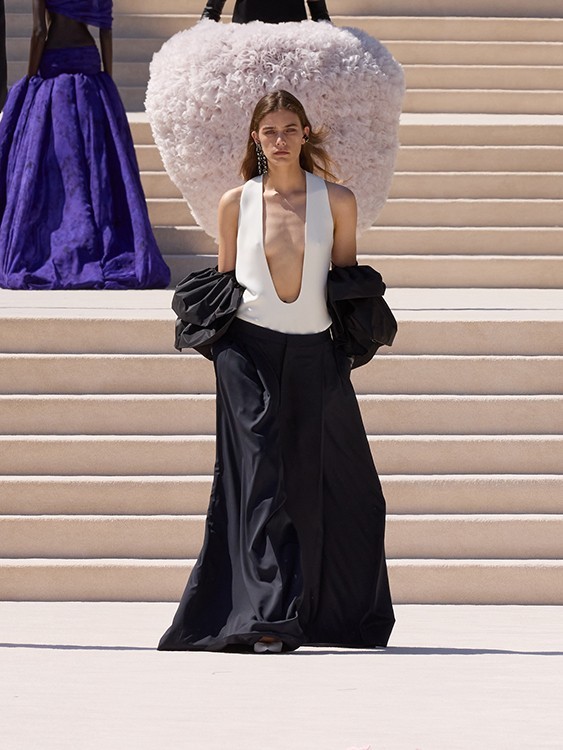
There are debuts, and then there are the debuts the whole of fashion rearranges its calendar around. When Balenciaga presented its 55th couture collection on the morning of Wednesday, July 8, 2026, in the open air at the Cité Internationale Universitaire de Paris, Pierpaolo Piccioli was not simply showing clothes. He was answering the biggest question in Paris: what does the house of Cristóbal Balenciaga — the master couturier's couturier, the architect of modern silhouette — become in the hands of fashion's great romantic, after a decade in which Demna turned it into a provocation machine of hoodies, spectacle and dystopian cool? Under a blazing summer sun, with models descending broad stone steps into a circular garden, Piccioli gave his answer slowly, look by look, in volumes that seemed to breathe.
The stakes could hardly have been higher. Piccioli, confirmed as creative director in May 2025 after his celebrated years at Valentino, had already charmed Paris with his ready-to-wear debut the previous autumn. But couture is the soul of this house. Cristóbal Balenciaga built his legend in the salon, and the couture line — revived in recent years as the house's conscience — is where a Balenciaga designer is ultimately judged. A ready-to-wear debut can be forgiven its experiments. A first couture collection is a statement of belief about what the house is for.
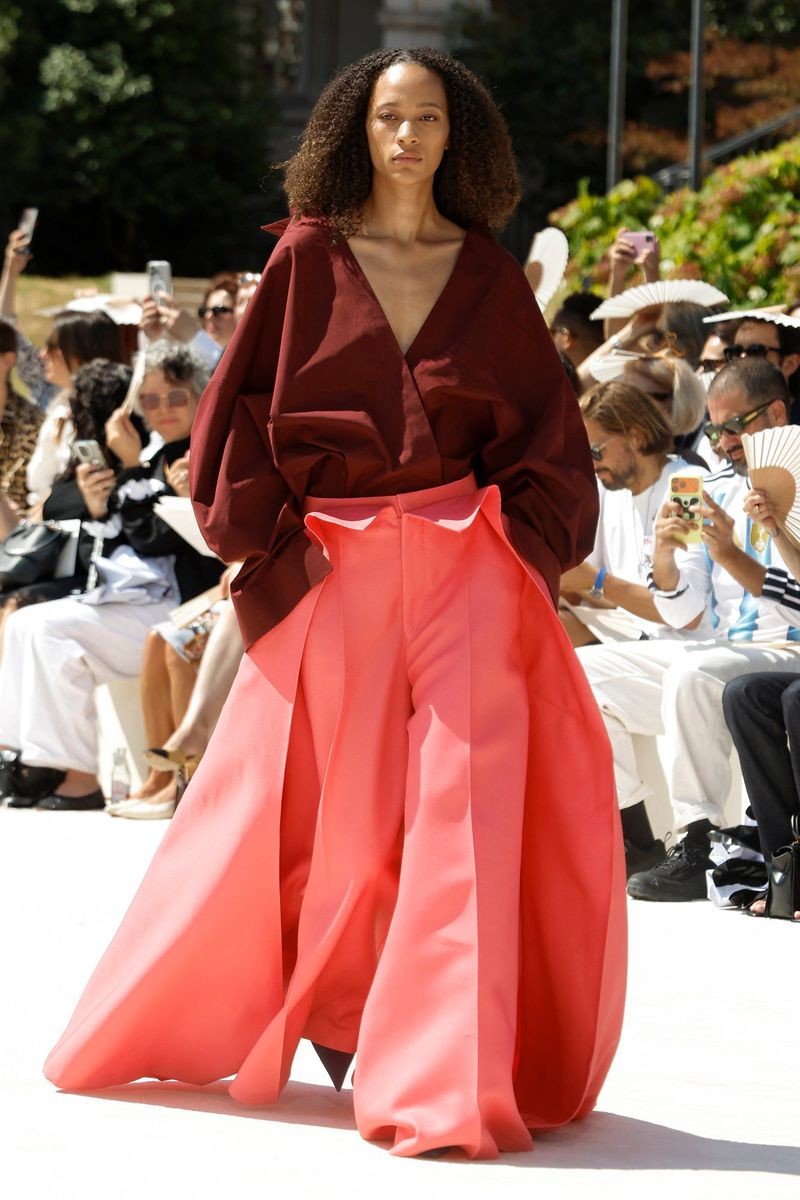
What Piccioli delivered was neither a museum exercise nor a rupture. It was a conversation across seventy years: sculptural silhouettes drawn from Cristóbal's archive — the sack, the balloon, the trapeze, the peacock tail — rebuilt with a modern softness, and lit up with the saturated colour that has always been Piccioli's signature. Vivid pinks, electric coral orange, aquamarine and mint greens, lavender, butter yellow and deep burgundy moved through classic volumes like sunlight through stained glass. The clothes were rigorous, but they were not austere. They were joyful, and the joy was deliberate.
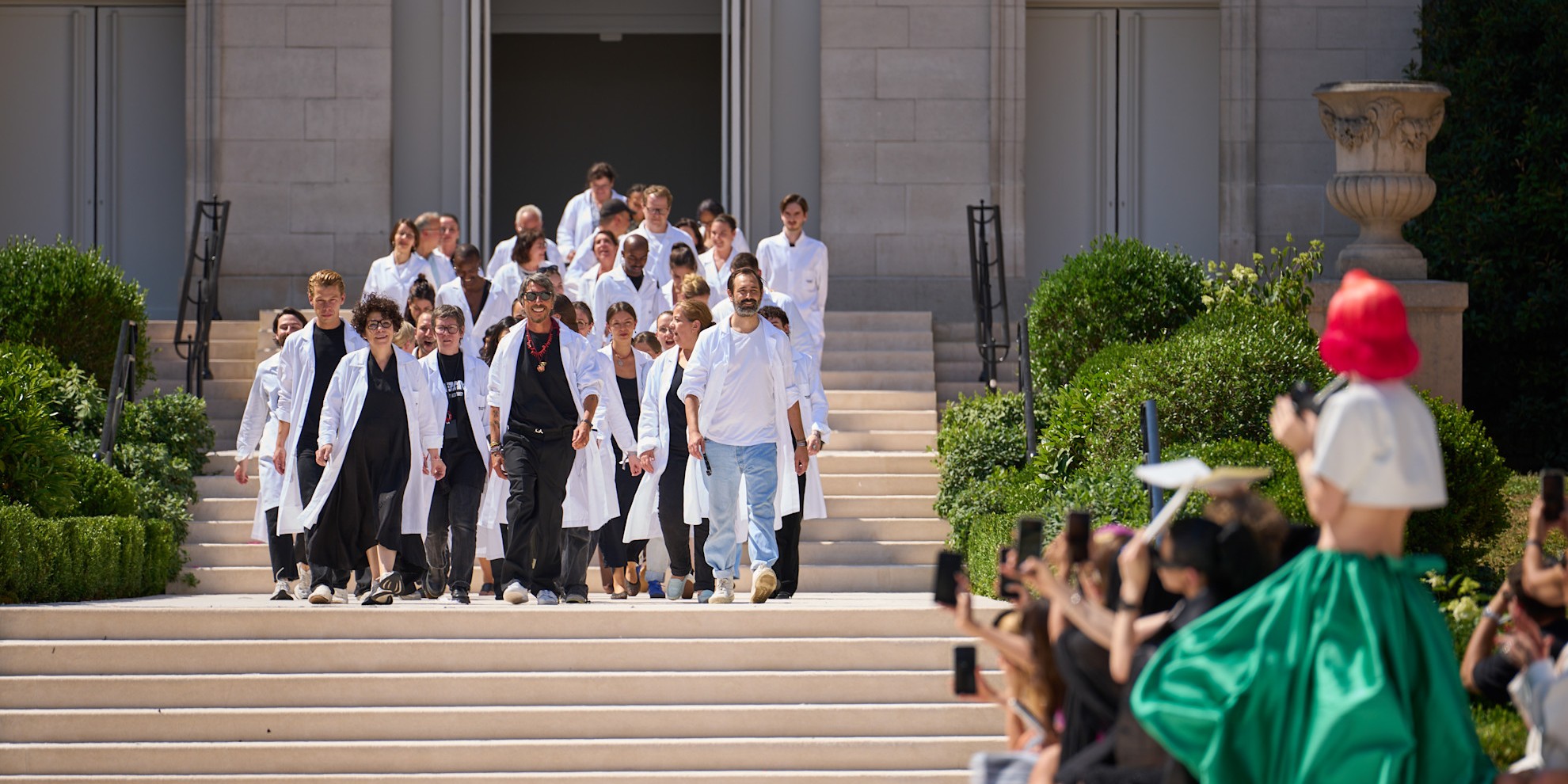
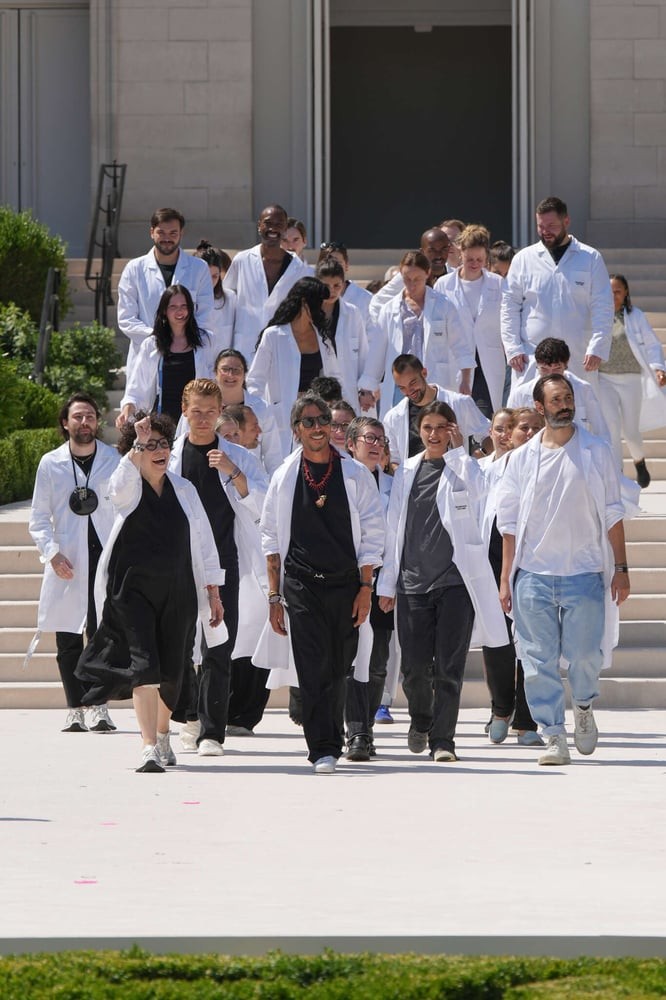
By the end, the garden knew it had witnessed something. As the final look disappeared and Piccioli emerged for his bow — flanked, pointedly, by the petites mains of his atelier, the seamstresses and tailors who had built the collection by hand — the audience rose in a sustained standing ovation. It was the defining image of the season: a designer sharing his applause with the people who sew. This is the story of how that collection was made, what it looked like up close, and why it may be the moment Balenciaga fell back in love with beauty.
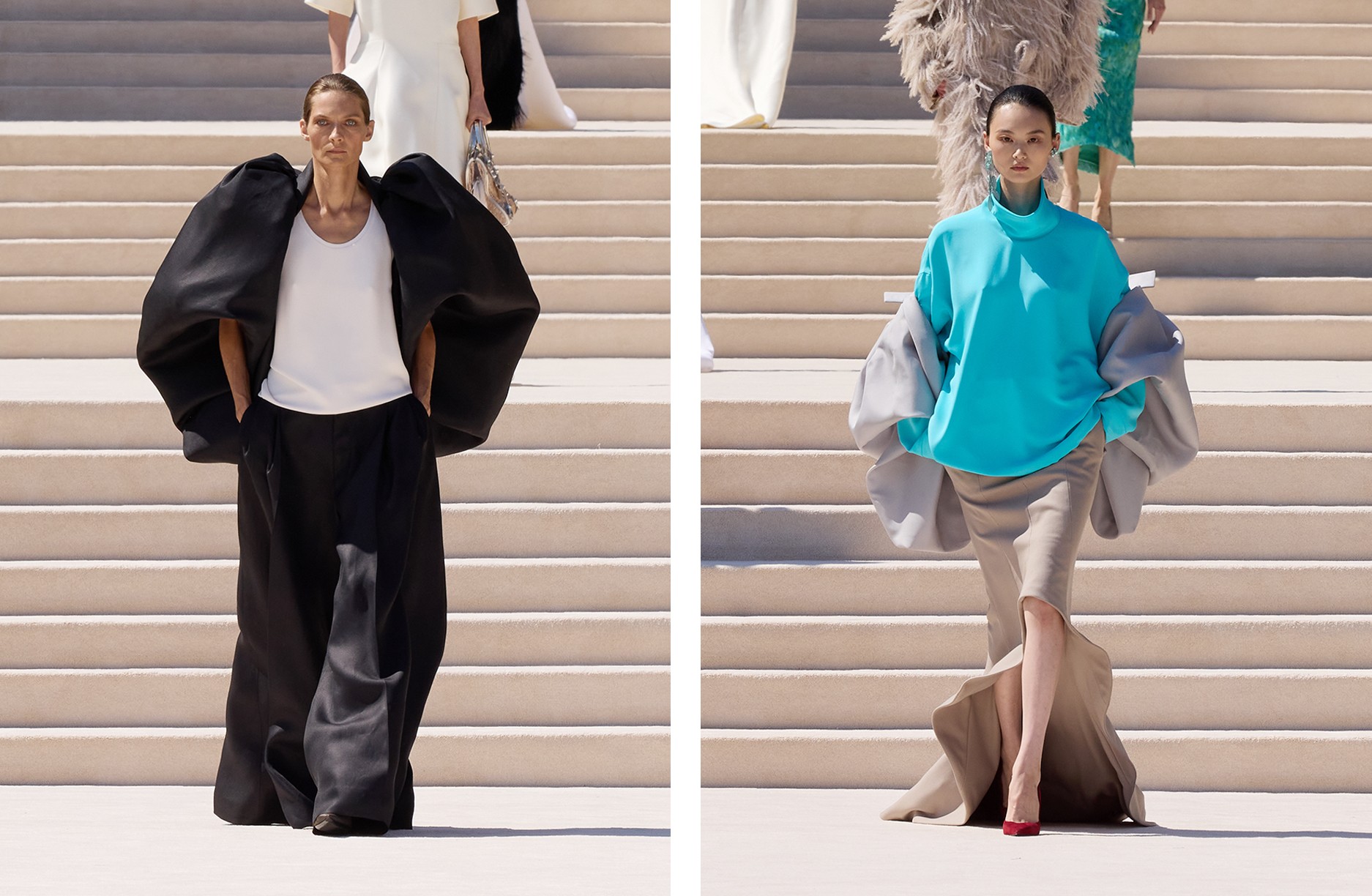
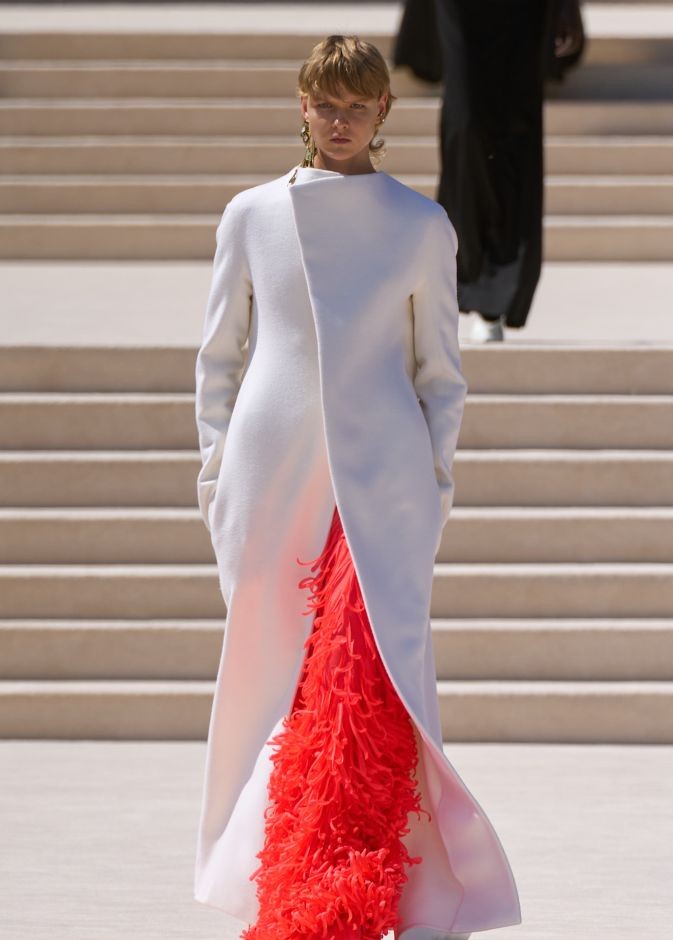
"Couture is made by the people who live it." — Pierpaolo Piccioli, Balenciaga 55th Couture show notes
The Archive, Worn Lightly
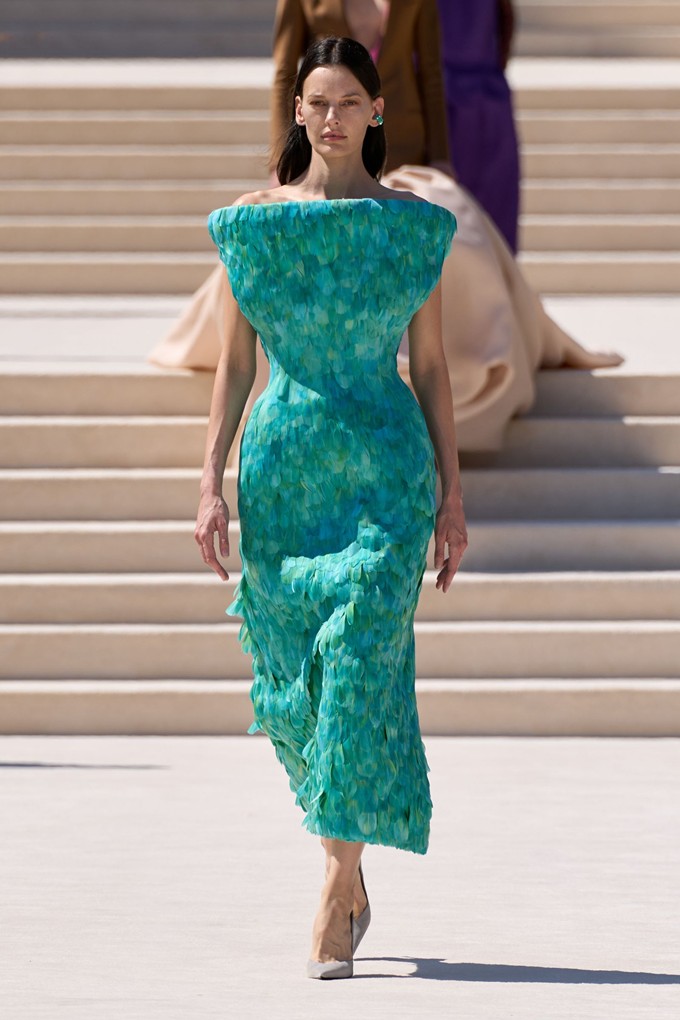
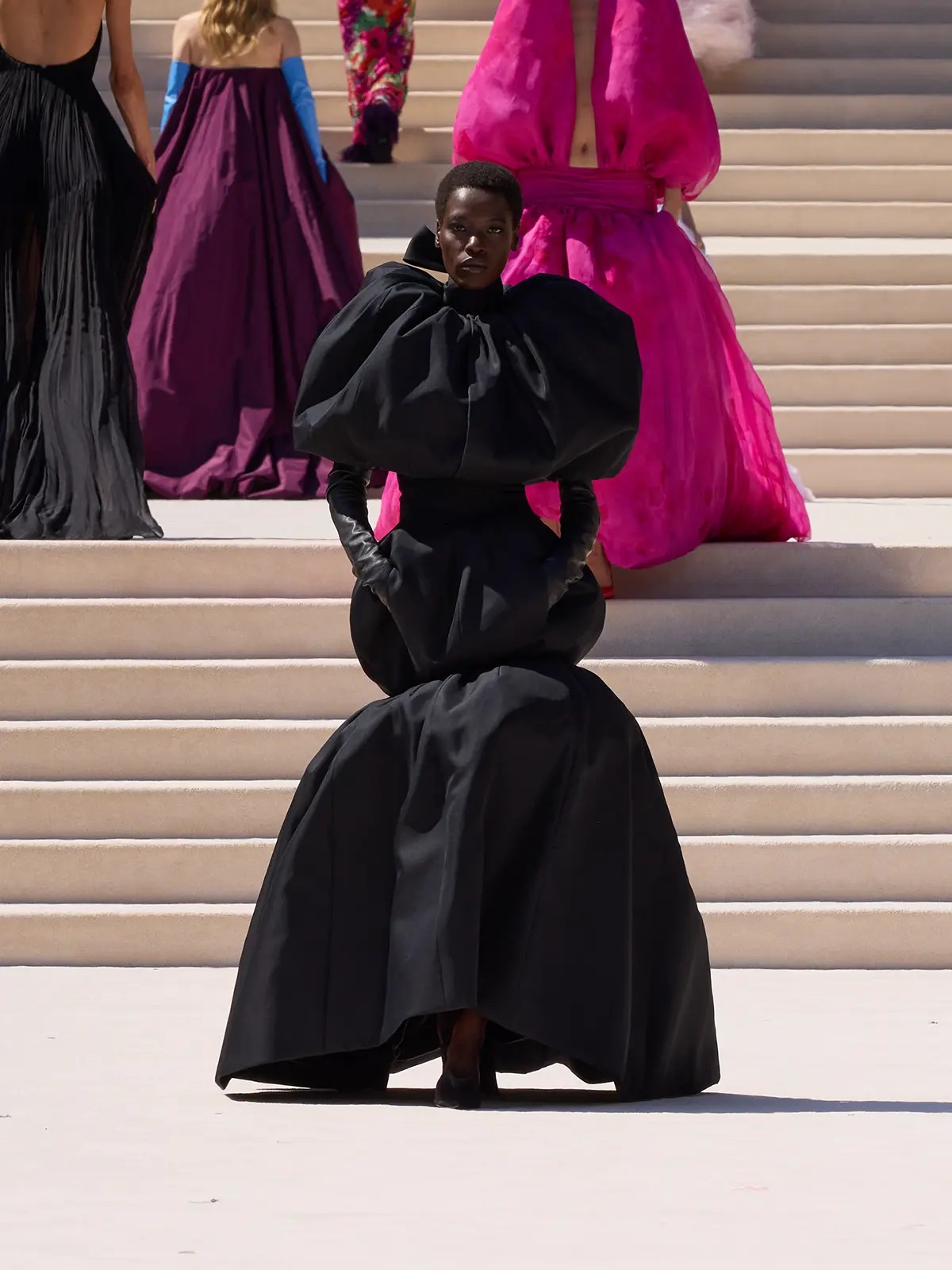
Piccioli began where any Balenciaga couture designer must: in the archive, with the shapes Cristóbal invented and fashion never stopped borrowing. The collection's spine was sculptural — enveloping, shell-like volumes, balloon hems, trapeze lines that swing away from the body, and sack silhouettes whose apparent simplicity hides ferocious construction. Look 4, singled out across the coverage, distilled the approach: a silhouette that reads like a direct quotation from the founder's 1950s and 1960s work, yet cut and finished so lightly that it moves like something designed yesterday. Oversized shoulders recurred throughout, several looks seeming to have stepped straight out of the archive photographs, while a collar engineered to extend away from the body turned a tailored look into architecture. Crucially, Piccioli resisted homage as an end in itself. When the word was suggested to him, he reportedly wrinkled his nose. The archive, in his hands, is not a costume library; it is a grammar — and this collection was his first fluent sentence in it, spoken in his own unmistakable accent.
A Colour Story Only Piccioli Could Tell
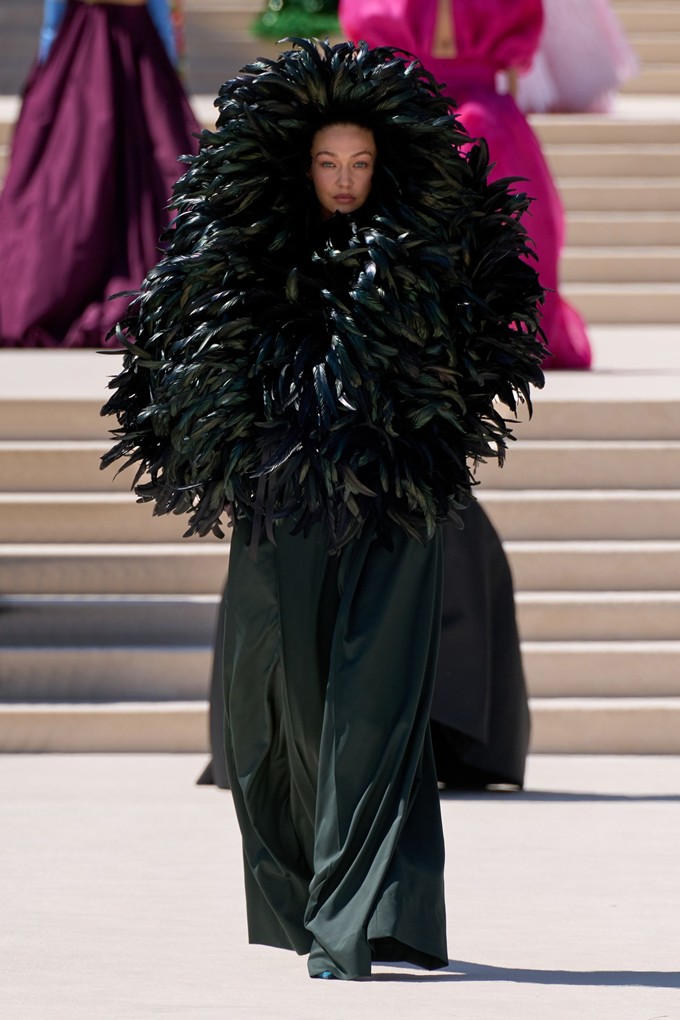
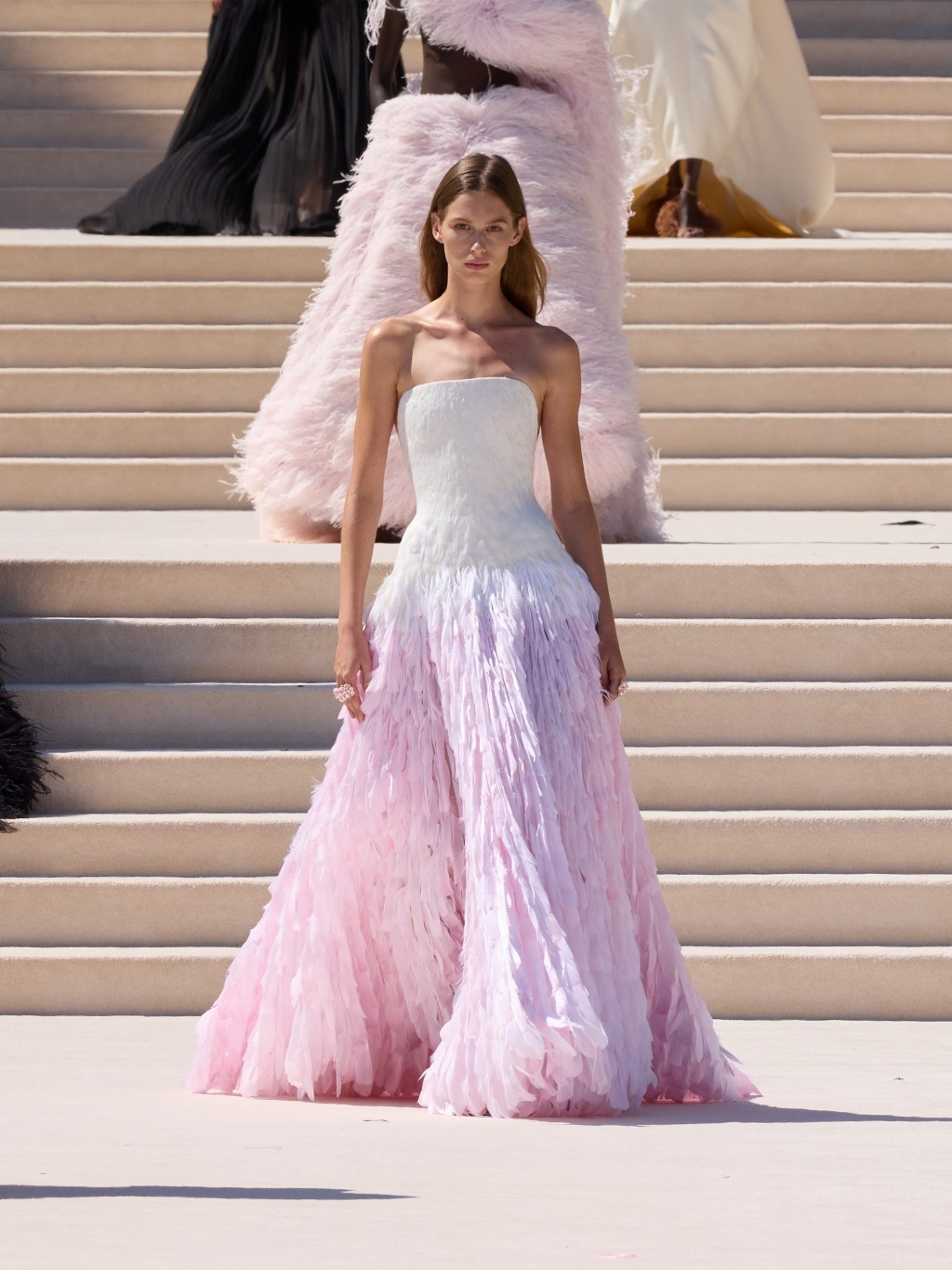
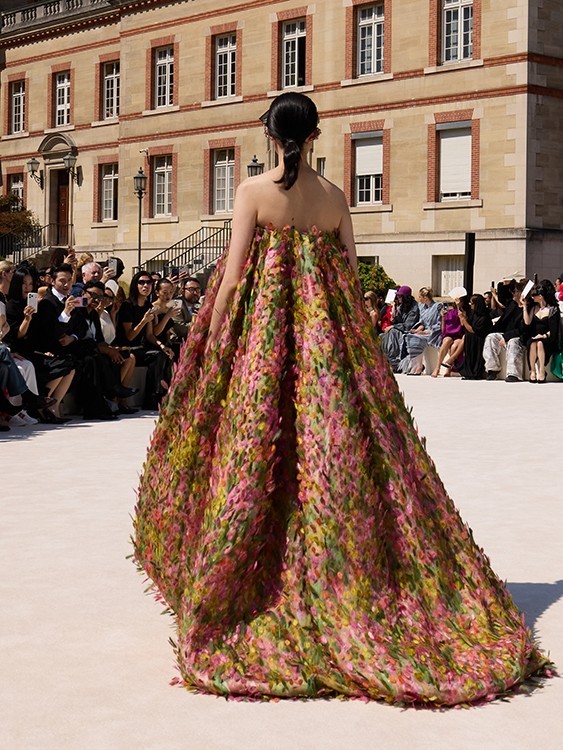
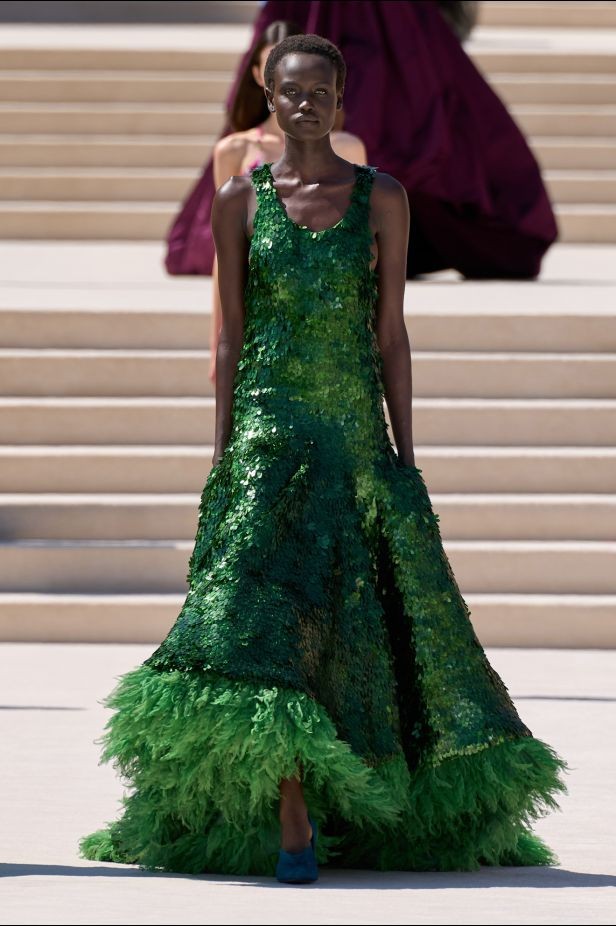
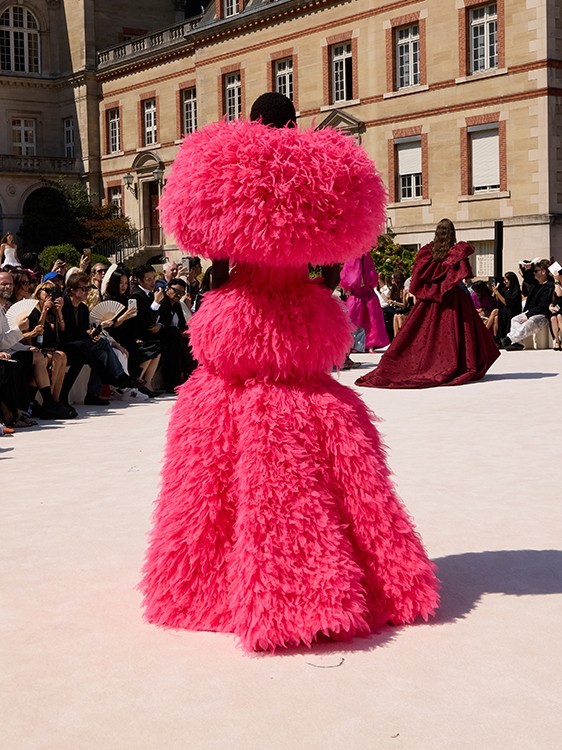
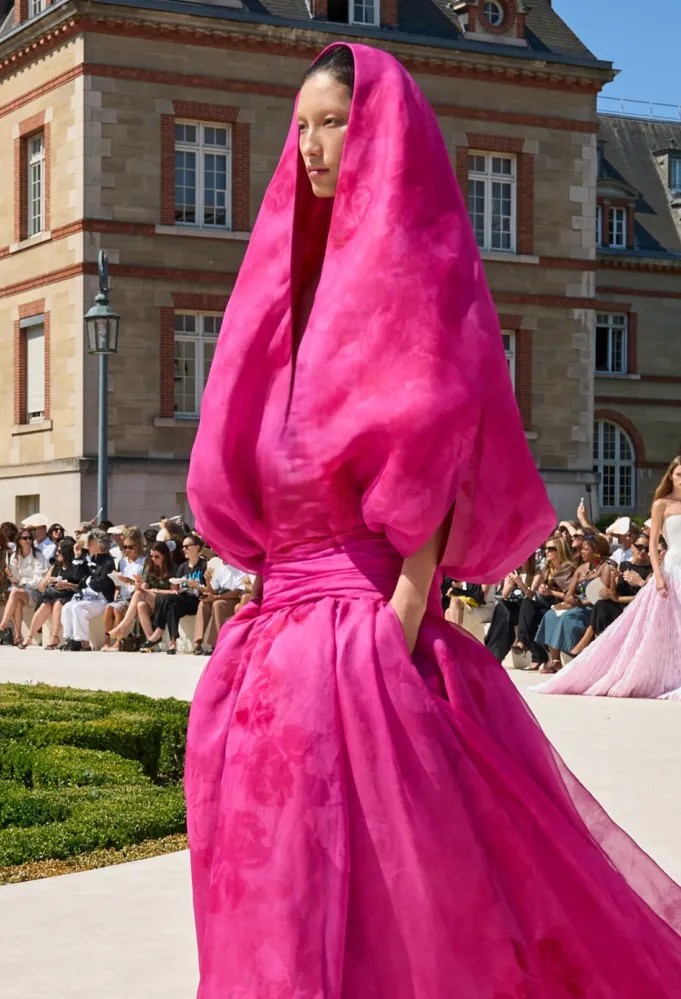
If the silhouettes belonged to Cristóbal, the colour belonged entirely to Piccioli, the designer who once turned an entire Valentino collection into a single shade of pink and made it a global phenomenon. Against a foundation of pure white, stone grey, sand and jet black, he ran a vivid, almost edible palette: shocking and pastel pinks, electric coral orange, aquamarine and mint greens, sky blue, lavender, butter yellow, forest green, aubergine and claret. Feathers carried much of the chromatic drama — appearing in vivid red, acid yellow, violet, black, blush and fuchsia — sometimes as full, enveloping feathered silhouettes, sometimes glimpsed beneath a strict tailored coat, colour breaking through discipline like emotion through composure. One covetable pairing matched lavender trousers with an oversized butter-yellow blazer; elsewhere a white swan of a look and a pink extravaganza pushed the feather work toward pure theatre. In the hard Paris sunlight of the Cité's garden, the palette did something photographs only half capture: it made couture look happy, and happiness, after years of fashion gloom, felt radical.
Inside the Atelier: Hands, Feathers and a New Silk
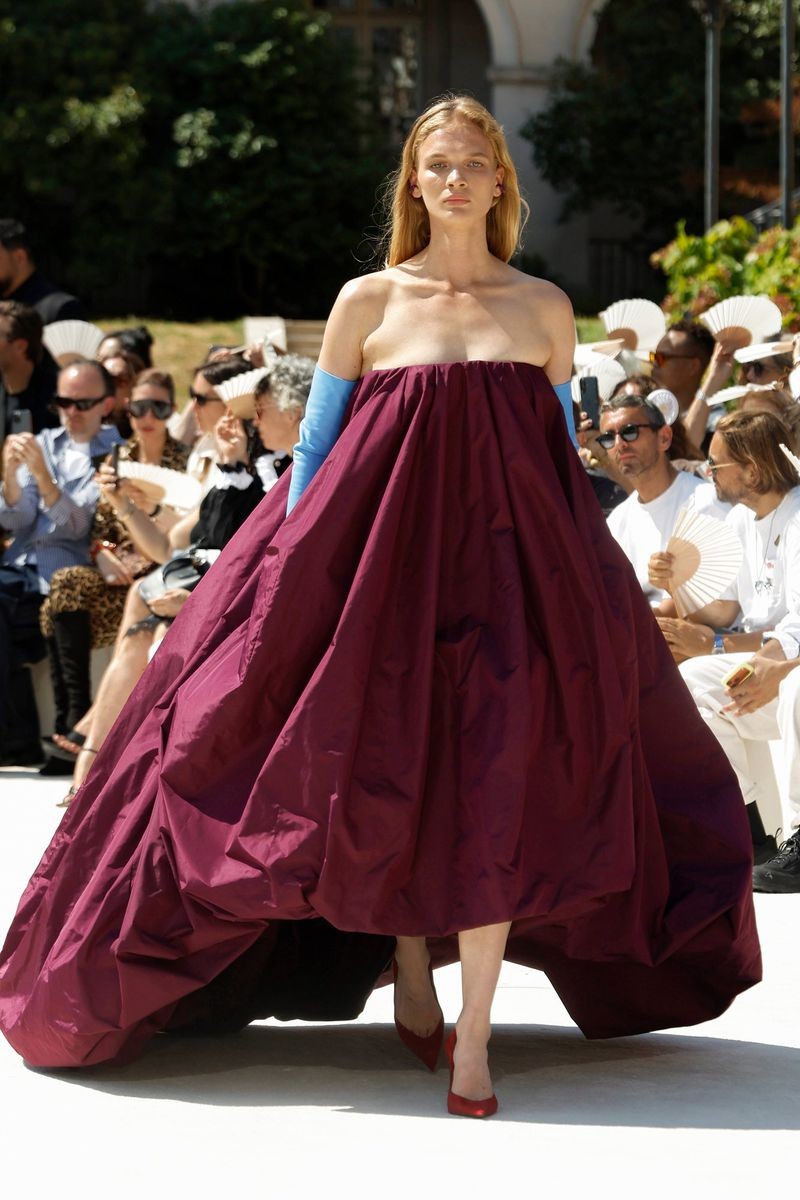
Piccioli framed the entire debut as a tribute to making, and the craft numbers back him up. One bustier dress carried 24,150 feathers of shredded gazar, applied by hand; another was covered in 8,000 petals, each painted individually. Tailored cashmere coats and dresses were built over hand-molded leather forms hidden inside the garments, so the clothes appear to hold the memory of the bodies within them — architecture generated from the inside out, impossibly light yet rigorously controlled. Piccioli also revived Neo Gazar, the crisp silk gazar first developed for Cristóbal and essential to the house's sculptural language, in puff-sleeved and moulded volumes that hold their shape in the air. And he pushed the atelier toward the future with AMSilk, a bioengineered, fossil-fuel-free silk alternative with a tensile strength reported at twice that of steel, used for a pure white dress based on the classic sack silhouette — couture's oldest shape, cut from its newest fibre. His show notes said it plainly: this was the work of human beings in the atelier, human beings who are couture.
The Looks Everyone Will Remember
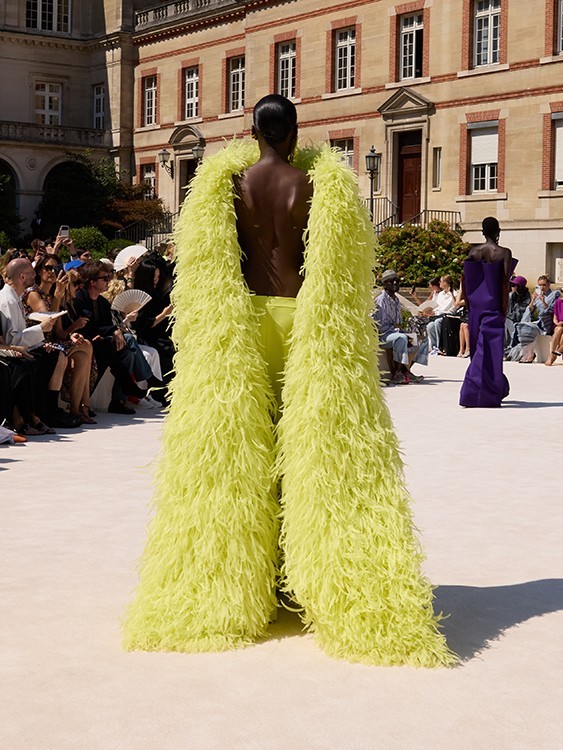
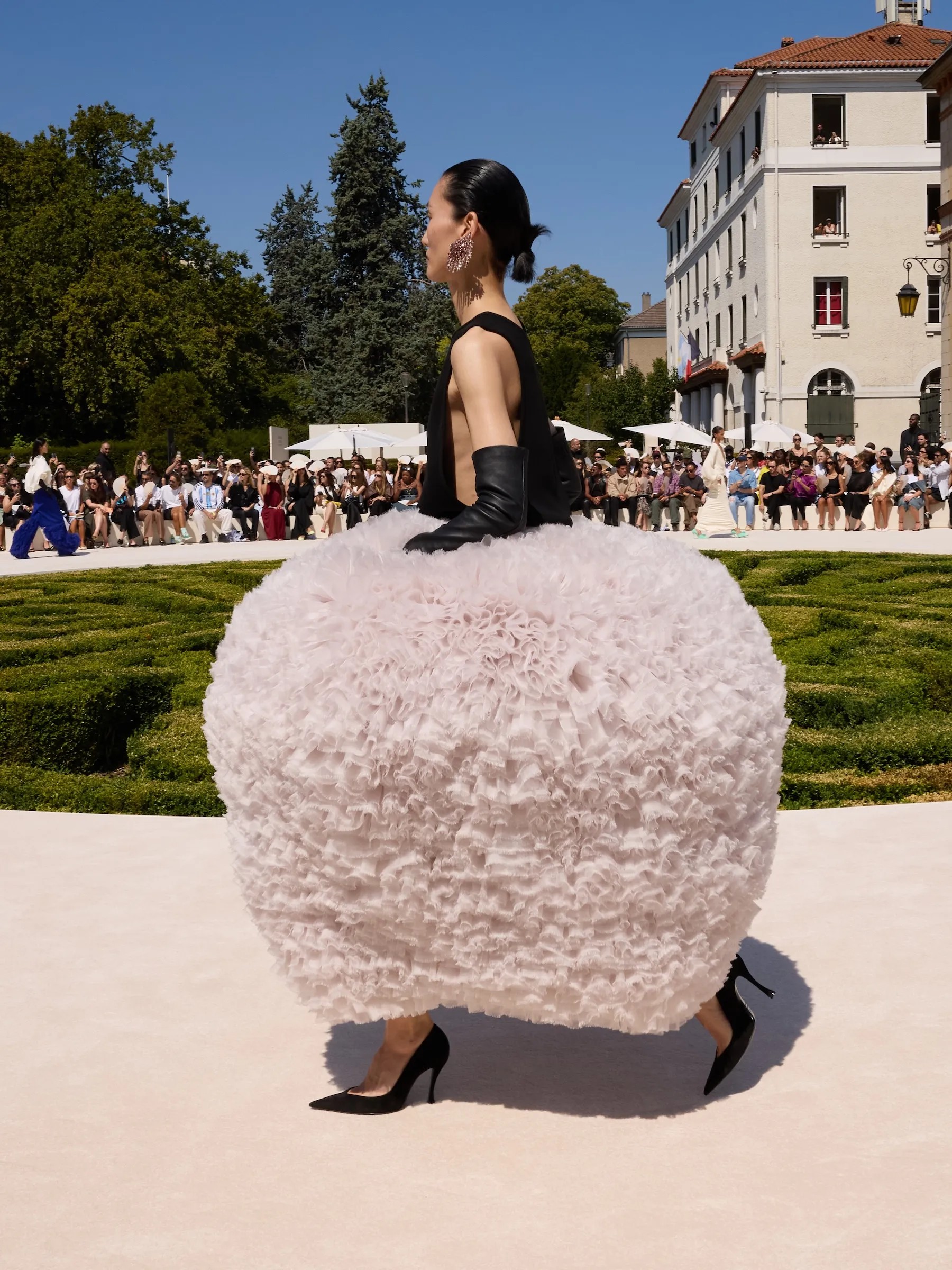
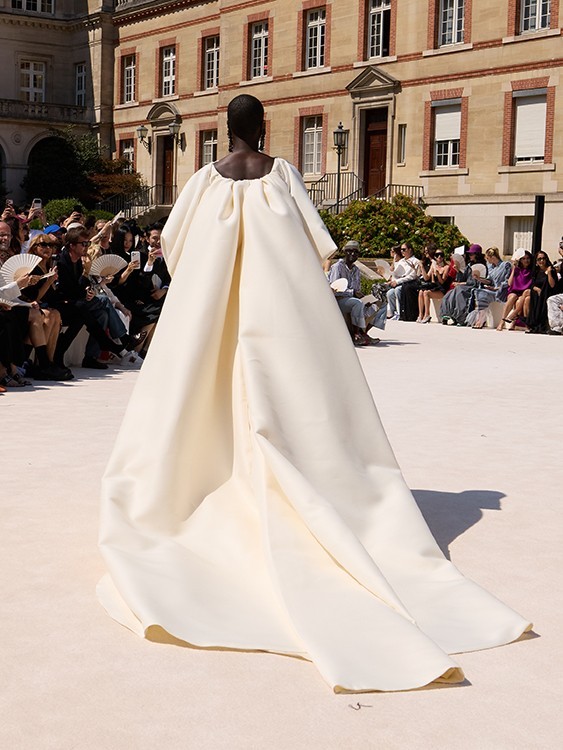
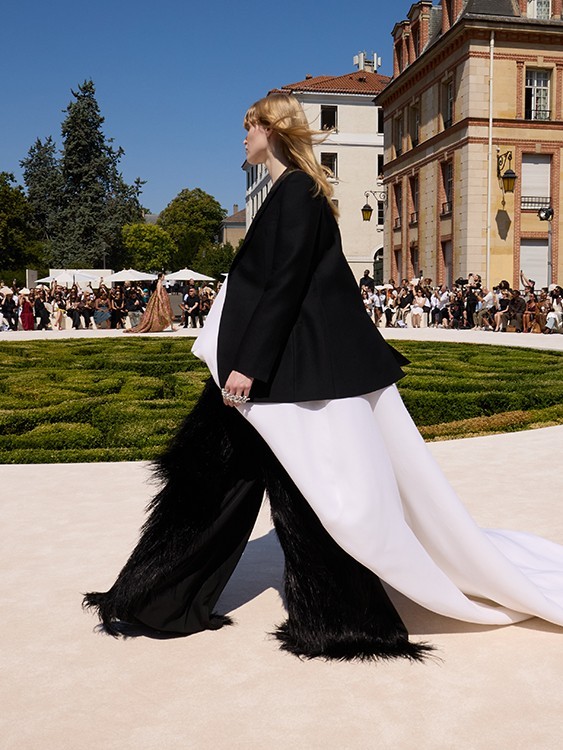
Every great couture debut leaves a handful of images that define it, and this one left more than most. The opening passages set the tone with a simple white blouse paired with an elaborately plumed jacket, its feathers fanning like an eagle's wings while quoting Cristóbal's 1960s silhouettes. A black blazer worn with a fluid white draped blouse and dramatic feathered trousers showed Piccioli fusing tailoring and softness in a single outfit. Gigi Hadid made a surprise runway appearance — her first in months — in pleated trousers and a black top crowned with a sculptural, rose-like collar, and later in an egg-shaped, sleeveless feathered creation made with milliner Philip Treacy, whose black-feather headpiece for Look 47 dissolved the line between hat and garment entirely. A strong-shouldered lemon-yellow sequined gown glowed in the afternoon sun, sheer chiffon hooded dresses floated past with white fluffy bustles, and Anok Yai — who had opened the show — closed it in a striking trapeze wedding gown drawn from Cristóbal's spring/summer 1967 collection, bringing the archive full circle in a single walk.
The Front Row, the Heat and the Ovation
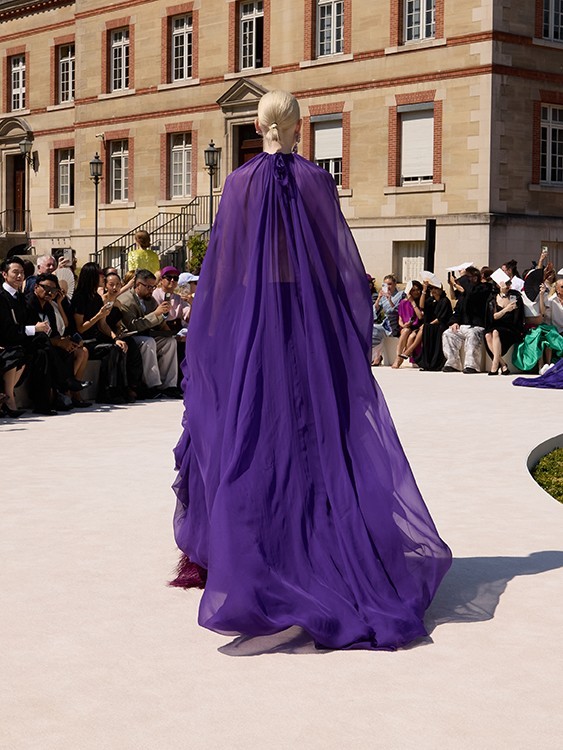
The show's setting was itself a statement. Rather than the historic salons at 10 Avenue George V, Piccioli took couture outside, into the streets and gardens of the Cité Internationale Universitaire, on one of the hottest mornings of a record-breaking Paris summer — guests fanned themselves in the heat as the first looks descended the steps. Among those in attendance for the historic morning, coverage named Farida Khelfa, Teyana Taylor and Michelle Randolph, watching a guest list that mixed clients, editors and students in a deliberately open-air, democratic frame. The celebrity gravity around Piccioli's Balenciaga had been established the previous autumn, when Meghan Markle and Anne Hathaway sat front row at his ready-to-wear debut, "The Heartbeat" — the Duchess's appearance became one of the defining front-row moments of that season — and the couture debut carried the same sense of occasion. When it ended, the reaction was not polite approval but release: a loud, sustained standing ovation, with Piccioli taking his bow surrounded by his atelier team in their white coats, insisting the applause belonged to them.
What It Means for Balenciaga Now
So what did Paris actually witness? Not a rejection of the Demna era so much as a rebalancing of the house around its oldest asset: the atelier. Where the previous decade made Balenciaga a byword for provocation, Piccioli's couture argues that the house's future runs through Cristóbal's original values — construction, volume, fabric innovation and clothes made, slowly and by hand, for people who will actually live in them. That is the meaning of his line that couture is made by the people who live it: the makers in the atelier and the clients on the steps are part of the same sentence. The commercial logic is sound, too. Couture is Balenciaga's halo, and a halo built on beauty, colour and craft photographs beautifully, travels globally and gives the ready-to-wear a romantic centre of gravity it had lost. There will be sceptics — some critics wanted more risk, a sharper break — but a first couture collection is a foundation, not a finale. Piccioli has laid his in gazar, feathers and colour, and Paris stood up for it. The Balenciaga that Cristóbal built is speaking again, in a warmer voice.