
From childhood Hot Wheels to a Wekfest-winning Mazda, the Southern California enthusiast has made a lifelong love of cars into a distinctly personal work of art.
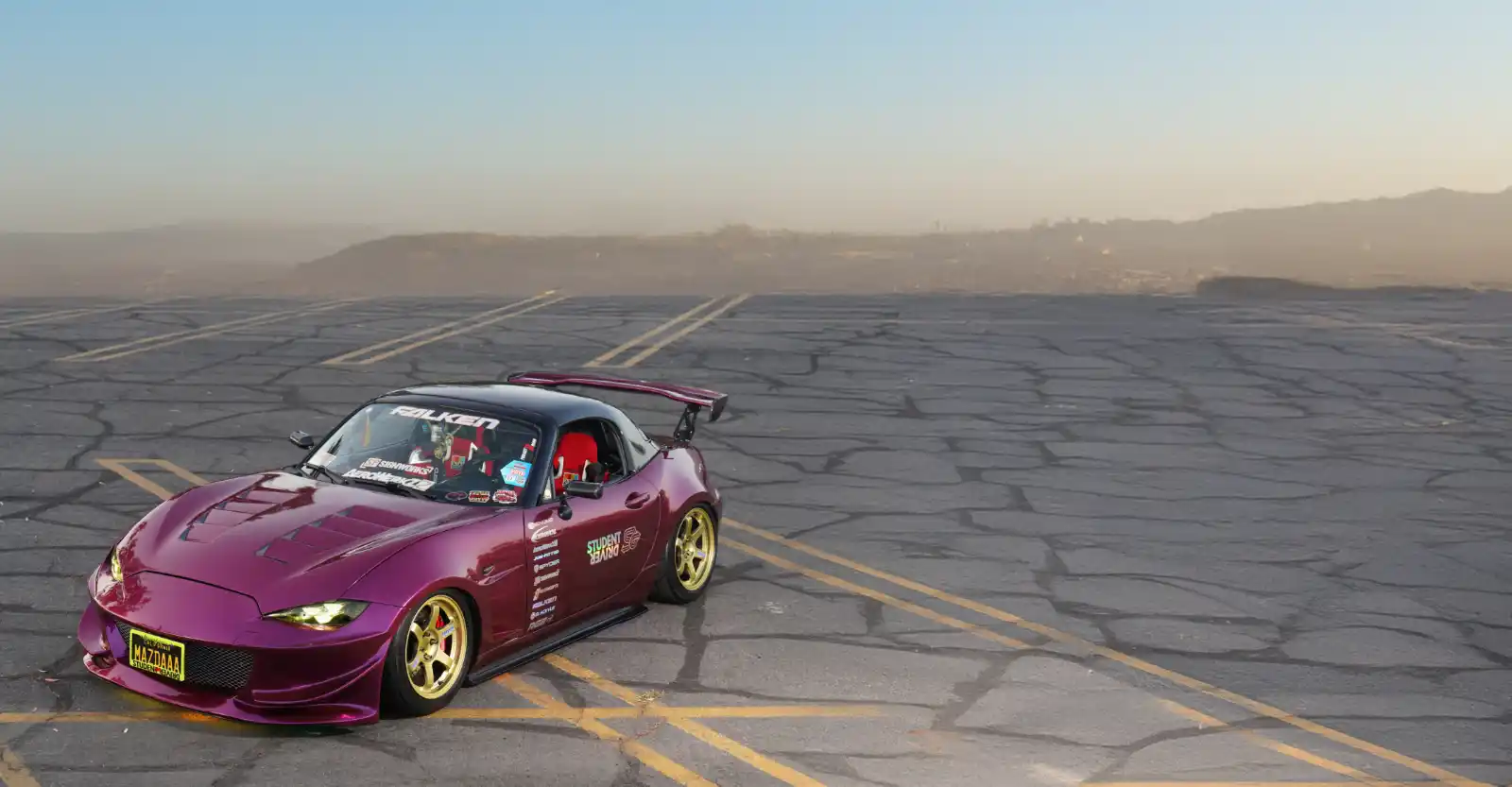
For Ken Takahashi, a remarkable show car begins long before the first modification is installed. It begins with a childhood memory: toy cars scattered across the house, tiny machines that inspired an imagination much bigger than their size. Today, that early fascination has grown into a meticulously personalized 2016 Mazda Miata Sport—an award-winning build that reflects seven years of persistence, discovery, and community.
The West Covina, California, resident was born in Torrance and works as a manager in an import-export business supplying the restaurant industry. Away from the car-show circuit, his pleasures are refreshingly familiar: spending time with friends, enjoying Korean barbecue, and collecting Hot Wheels. That last hobby connects the person he is now with the young boy he once was.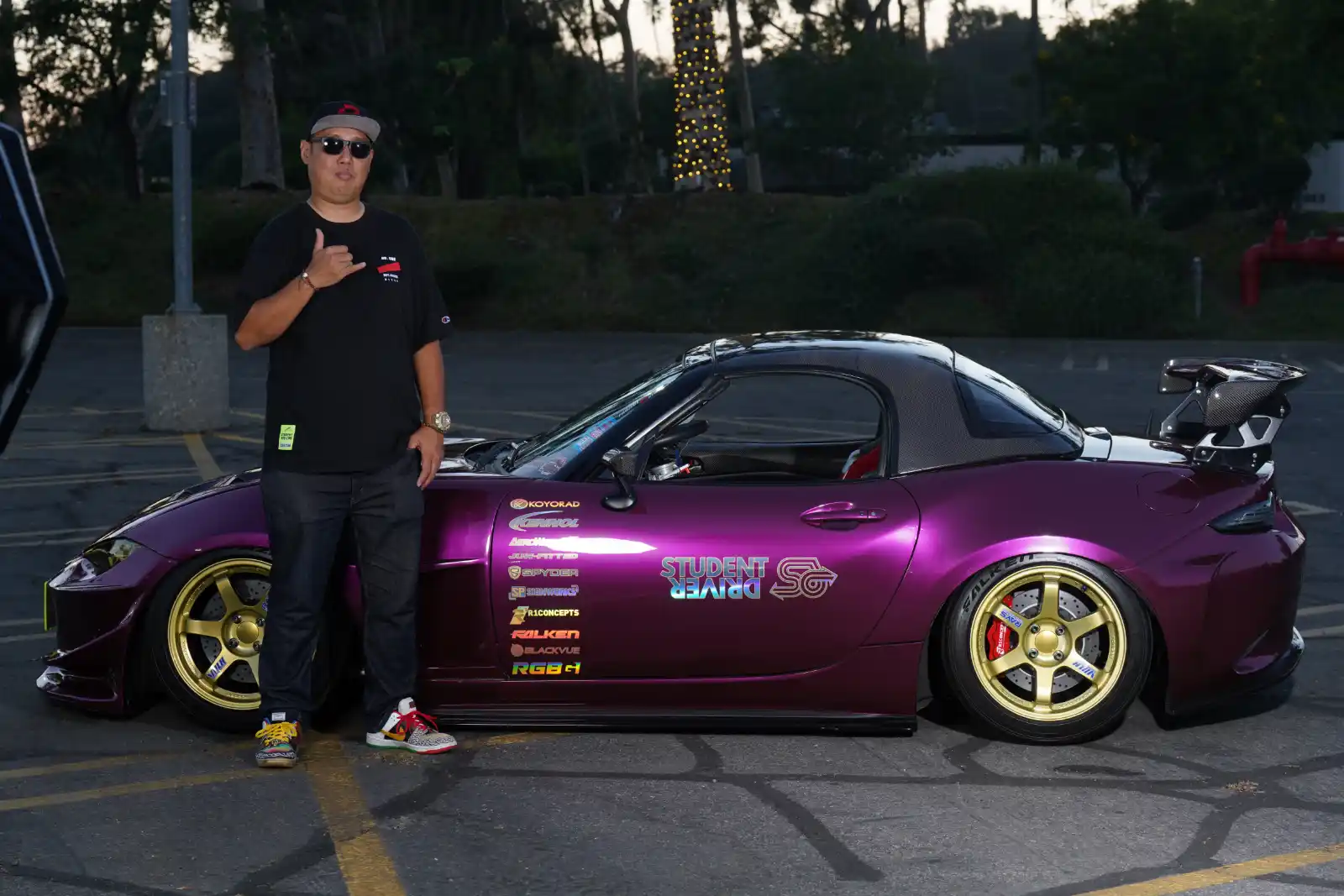
The first spark
Takahashi remembers being four or five when his parents brought home Tomica, Hot Wheels and Micro Machines. Relatives in Japan added to his collection. As he grew older, the toys became a gateway to the real thing. By his mid-teens, conversations with friends had turned to the cars they hoped to drive, and an invitation to Import Showoff at the Anaheim Convention Center around 2000 opened an entirely new world.
He had visited the Los Angeles Auto Show with his father, but modified-car culture was different. The creative builds and the people behind them made a lasting impression. He remembers meeting respected figures in that scene, including RJ De Vera, Mommy De Vera, Non Fujita, Ken Miyoshi and Shige Miyoshi. Their openness mattered as much as their cars. Someday, Takahashi hoped, visitors might stop at his own vehicle and feel that same excitement.
His first steps were modest. A 1997 Honda Prelude received a Ground Designs Black Widow body kit and an exhaust loud enough, he recalls, to set off parking-lot alarms. A customized 1994 Honda Accord followed, then a manual-transmission 2006 Scion xB. The Scion eventually earned an online feature with Import Tuner. By 2013, however, Takahashi had sold it and stepped back from the show scene.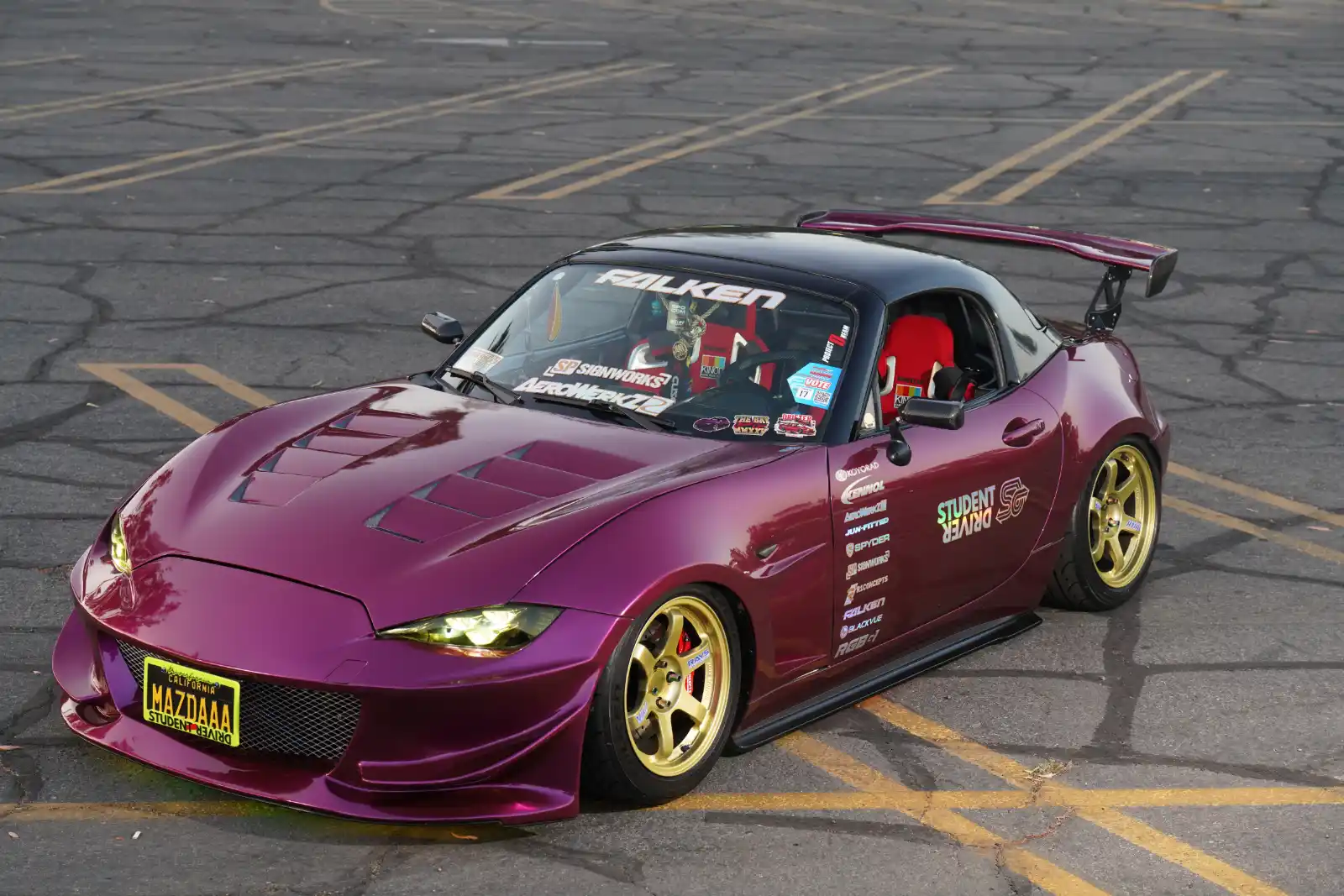
"My Miata isn‘t just metal and rubber. It‘s my personal space where I can disconnect from everything, listen to my favorite music, relieve stress, and simply enjoy driving wherever the road takes me."
A Miata that was never supposed to be a show car
When Takahashi returned to the market in 2019, his wish list was straightforward: a newer Japanese convertible with a manual gearbox. He considered a Honda S2000 but found clean examples increasingly difficult to buy at a suitable price. Instead, he purchased a used 2016 Mazda Miata Sport from Cerritos Browning Mazda.
At first, he expected to keep it stock and enjoy driving. Research and visits to the local KINOD Miata meet changed that plan. The possibility of returning to shows began to feel irresistible. One part led to another, and a casual purchase turned into a long-term creative project. Seven years later, Takahashi estimates that the car is only about 80 percent complete—not because he is unhappy with it, but because new ideas keep arriving.
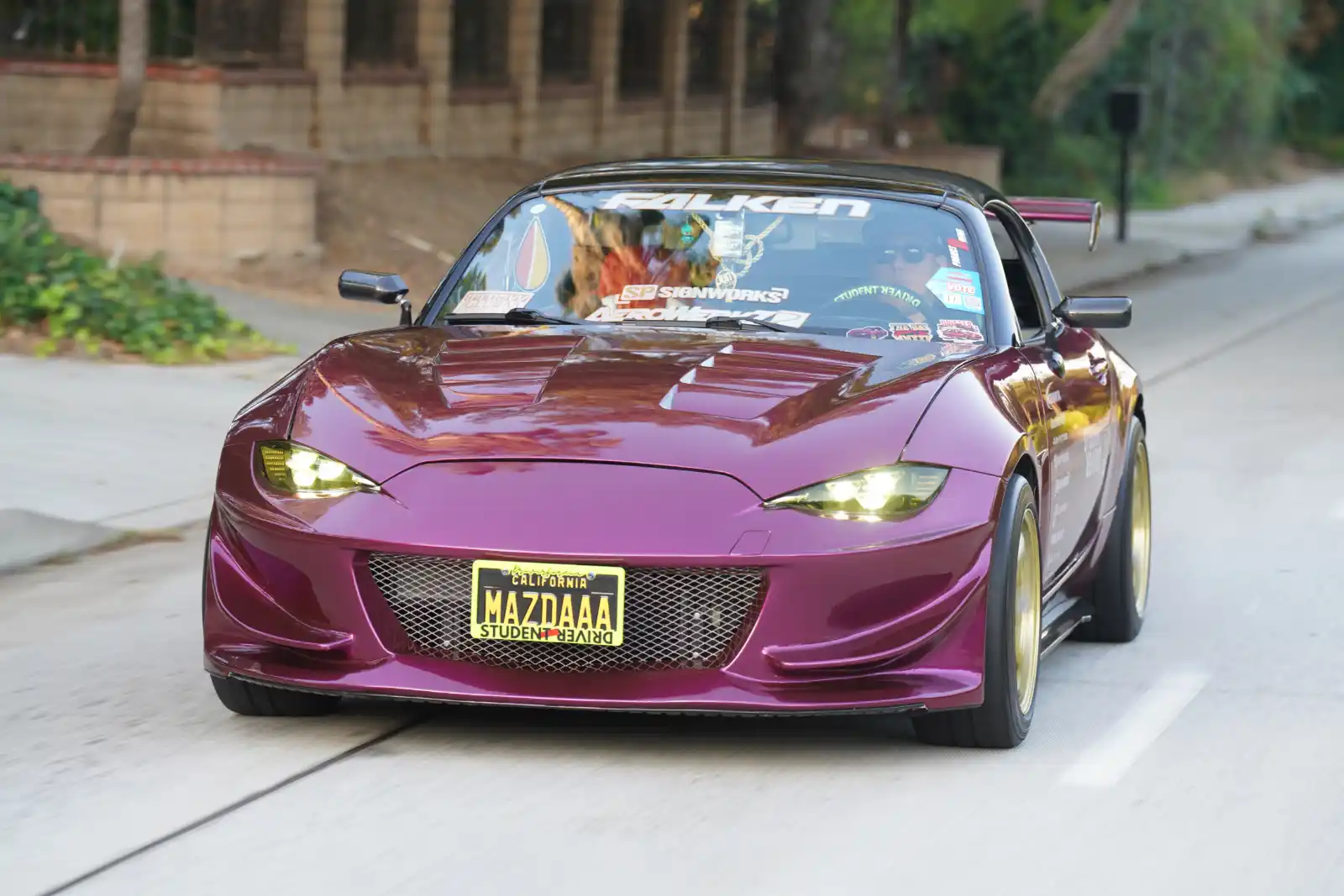
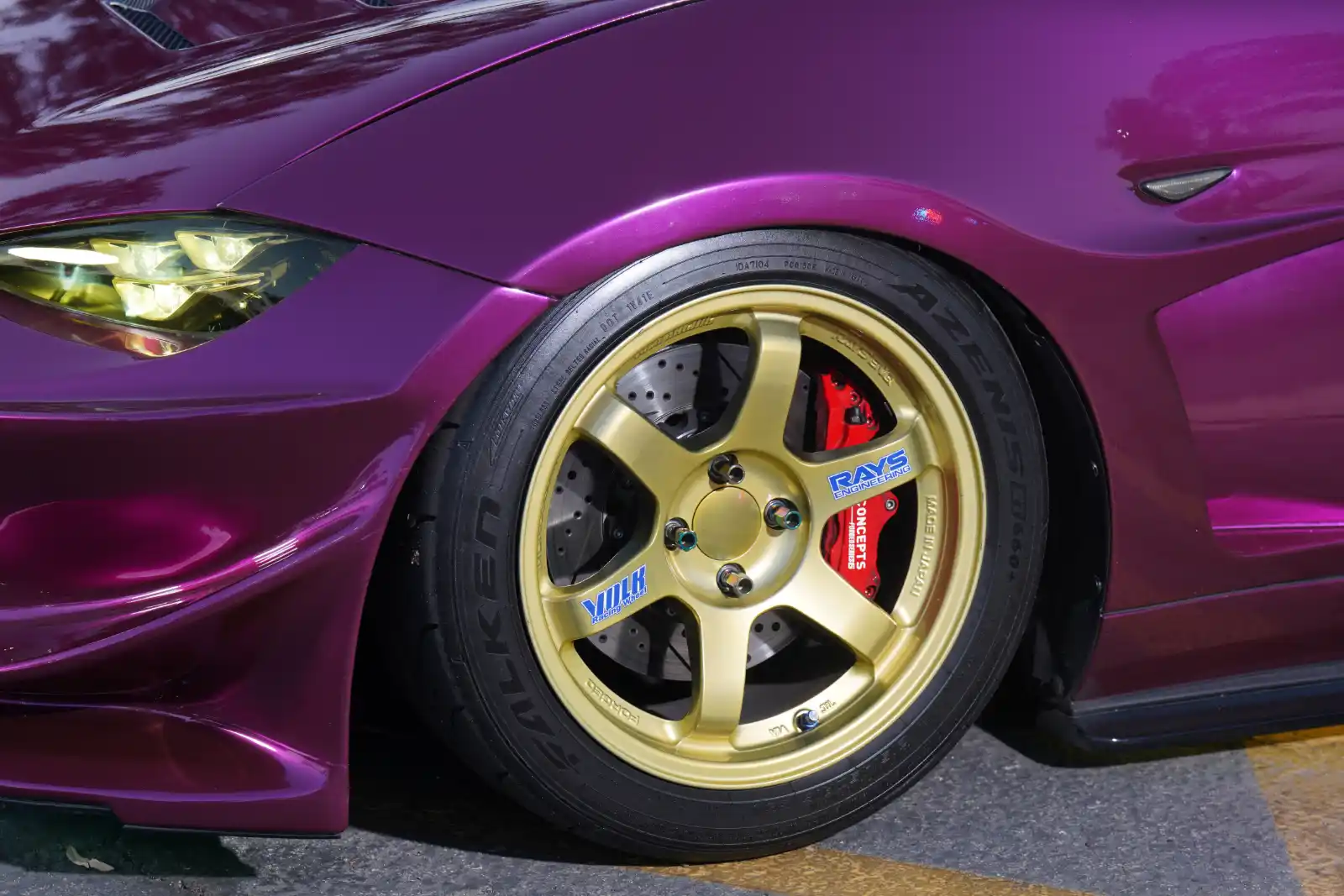
Visually, the Miata makes its intentions clear. Aerowerkz Motorsports applied a gloss metallic “Wild Berry Juice” paint-protection-film wrap. The car wears VOLK TE37 OG wheels in Hyper Gold, a factory-color specification Takahashi describes as one of one for their 16-by-8-inch, +25-offset size. A Junfitted air-ride setup with Air Lift management helps define its show stance. Under the hood is an Edelbrock supercharger, installed in 2026—a modification he had long dreamed of completing.
Perhaps the most personal detail is the headlight conversion. The units incorporate Lexus-style triple-beam elements created by a customizer in Japan. The maker did not ship to the United States, so Takahashi tracked down a Miata owner who was parting out a car and persuaded him to send the lights overseas. The Japanese builder later learned where they had ended up and, according to Takahashi, was delighted. It is the kind of story that makes a rare component more than simply a rare component.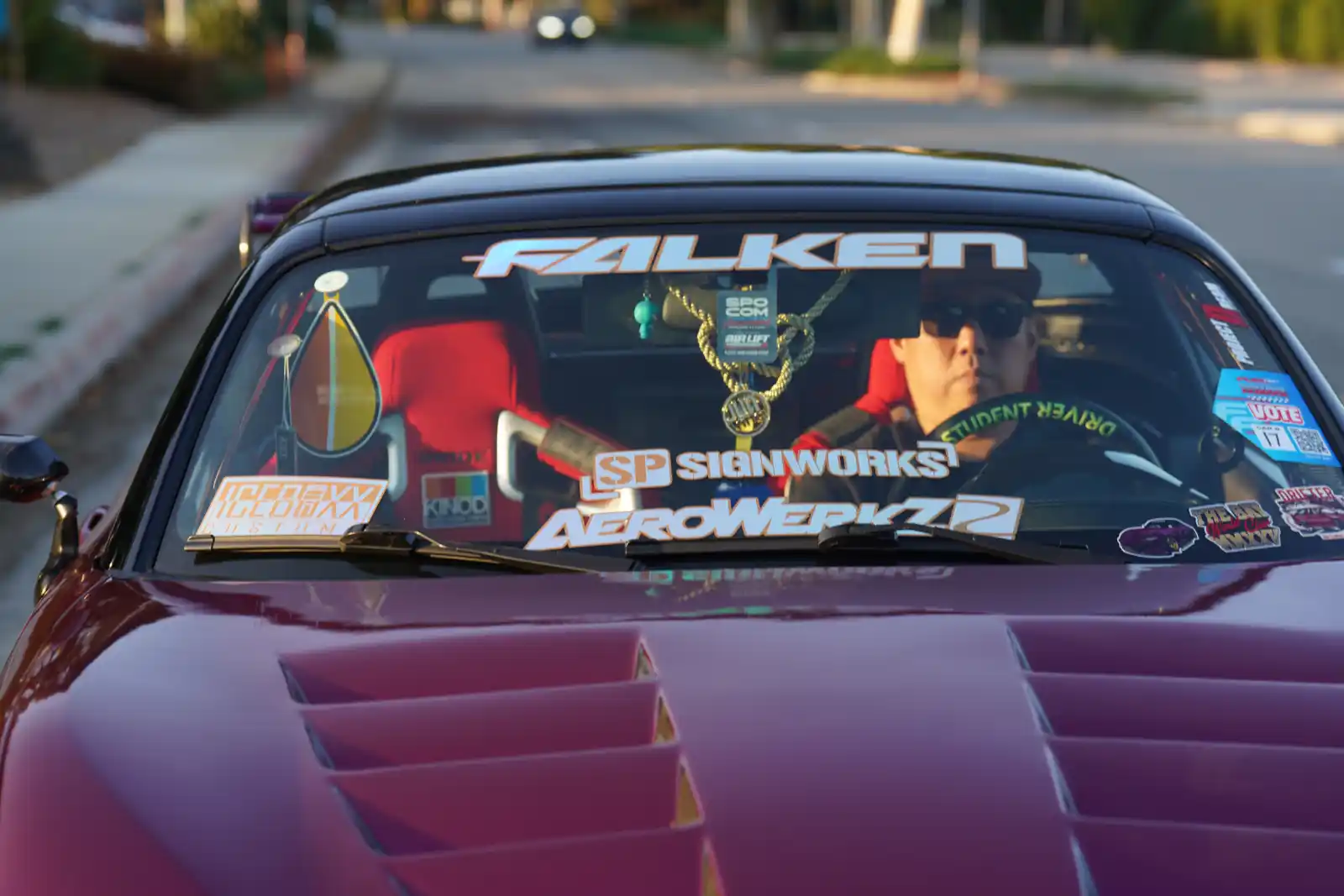
Seven years of work, waiting and support
From a distance, a finished show car can look effortless. Takahashi knows otherwise. Much of what he wanted came from Japan, where sourcing and shipping could mean waiting three or four months for container deliveries. Wrapping the car and fitting its supercharger were major undertakings handled with shops. The overall expense, he says, could cover the purchase of one or even two new cars.
Yet he has never seriously considered abandoning the project. His lesson is plain: be patient, research before buying and build within your means. He is equally candid about the misconception that a show-car owner must have limitless money—or that every modified car exists to race. His Miata is built primarily to be shown, not tracked. Its identity lies in careful selection, visual harmony and the joy of seeing a personal vision take form.
That harmony has attracted attention from spectators and judges who praise the cleanliness of the build and how its colors and parts work together. Takahashi also treasures the signatures on its dashboard from Sung Kang, Daniel Wu and Cody Walker, all of whom, he says, complimented the car.
The moment in San Jose
The Miata’s first show appearance was at Import Showoff in Little Tokyo, when its modifications were still relatively restrained. Even then, the response was encouraging. Over time, that response grew into recognition: a second-place Mazda-category award at Elite Tuner, a third-place People’s Choice result at FuelFest and, most memorably, Best Mazda at Wekfest San Jose in 2025.
San Jose was significant because it was the first time he had taken the Miata to a show outside Southern California. Winning there surprised him and affirmed years of decisions, sacrifices and support. At FuelFest, accepting recognition also meant speaking onstage before a crowd he recalls numbering in the thousands—an experience that left him nervous and happy in equal measure.
For Takahashi, though, applause is not the only measure of achievement. People have approached him to say his Miata inspired them to begin their own builds. He shares pointers, discusses parts and offers the kind of encouragement he once received from established owners. The enthusiastic teenager who admired other people’s cars has become someone other enthusiasts seek out.
More than metal and rubber
The Miata matters to Takahashi for reasons no trophy can fully capture. As he told Fusion Magazine, it represents “a private space where I can disconnect.” Sometimes that means listening to favorite music and driving without any particular destination. Other times, it means arriving at a meet and reconnecting with friends who understand why a wheel finish, a headlight design or a carefully chosen stance can mean so much.
He is quick to acknowledge that the work is not his alone. Mechanics, friends, shops and sponsors have helped bring the car to its current form. His supporters include Falken Tires, R1 Concepts, Aerowerkz, Jun Fitted, Kennol USA, Koyorad, SP Signworks and Edelbrock USA, alongside shops Iceboxx Customs and Project Dream and supporters HHWHH Collectibles and Student Driver.
The road still ahead
Even after achieving his supercharger goal, Takahashi is considering interior upgrades and possibly another wrap color. He has also begun a second project: a 2026 Toyota 4Runner, intended to be a clean, restrained build rather than an extravagant one. Five years from now, he imagines keeping both vehicles and perhaps showing them side by side.
His aspirations are not limited to parts or awards. He wants lasting friendships in the automotive community—and to remain approachable to anyone who shares his enthusiasm. His advice to future builders is direct: “Take your time, save up money, work hard and play hard!!!”
What began with miniature cars and a first visit to Import Showoff has come full circle. Takahashi once wished for a car worthy of a magazine feature; now, as he celebrates a Fusion Magazine cover opportunity, that childhood ambition has taken tangible shape. The most telling part of his story is not that his Miata stands out. It is that the man behind it still wants people to stop, say hello and talk about cars.
FOLLOW KEN
Mazda Miata: Instagram @Jdmmiatand • Lifestyle: @Aznballerz626 • Toyota 4Runner: @Heritagerunner • Facebook: Ken Takahashi