

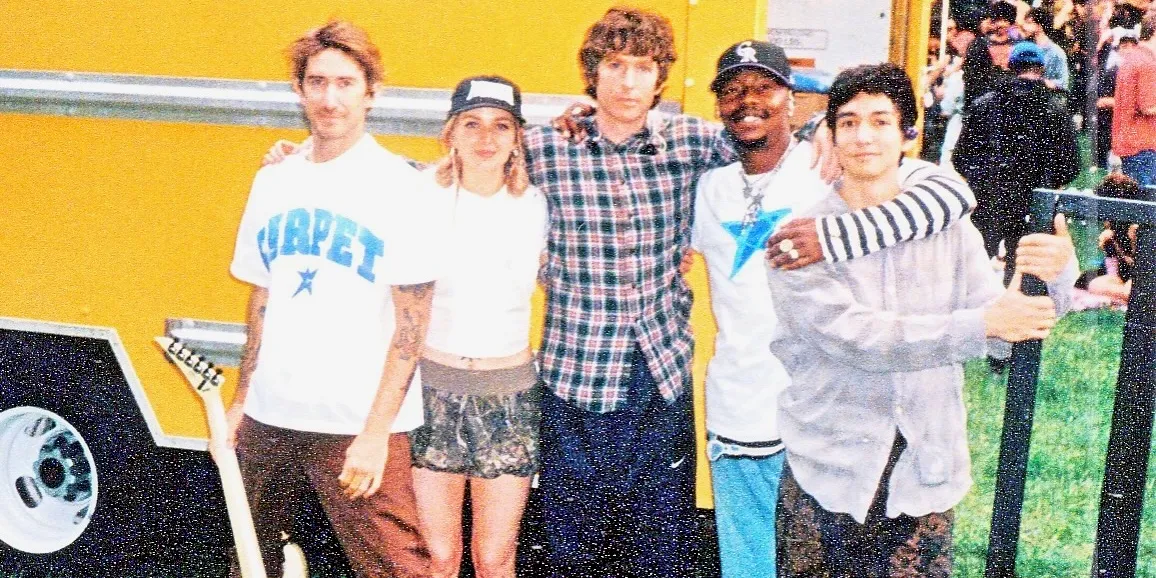
Every generation searches for the moment when music starts to feel dangerous, alive, and genuinely new again. Not dangerous because it is trying to shock, but because it refuses to follow the map. For a growing number of listeners, that moment has arrived with Turnstile. The Baltimore-born band has taken the urgency of hardcore punk and expanded it into something colorful, physical, emotional, and remarkably open. At a time when musical boundaries often seem like marketing categories, Turnstile makes those boundaries sound irrelevant.
Turnstile is not simply a hardcore band that became popular. It is a band that has made the idea of heavy music feel larger. Their songs can erupt with crushing guitars and frantic drums, then open into bright melodies, rhythmic experiments, or passages that seem to float above the noise. The contrast is the point. These songs invite a listener to move, but also to feel; to lose control for a moment and discover an unexpected sense of connection in the process.
That spirit began in Baltimore, Maryland, where Turnstile formed in 2010 and grew out of an intensely communal hardcore scene. Singer Brendan Yates, bassist Franz Lyons, drummer Daniel Fang, and guitarist Pat McCrory helped shape the band's identity over the years; guitarist Meg Mills joined the lineup for the current era. In the band's early recordings and first full-length album, Nonstop Feeling (2015), the foundation was already clear: groove, momentum, and a refusal to let aggression flatten the music's personality.
The group's 2018 album Time & Space widened the picture. It carried the direct impact of hardcore while making room for stranger textures and more ambitious production. The music was still built for sweat-soaked rooms, but the possibilities were expanding. Turnstile was developing a vocabulary in which rhythm could be as important as distortion and uplift could coexist with volume. It was a preview of just how far the band was willing to go.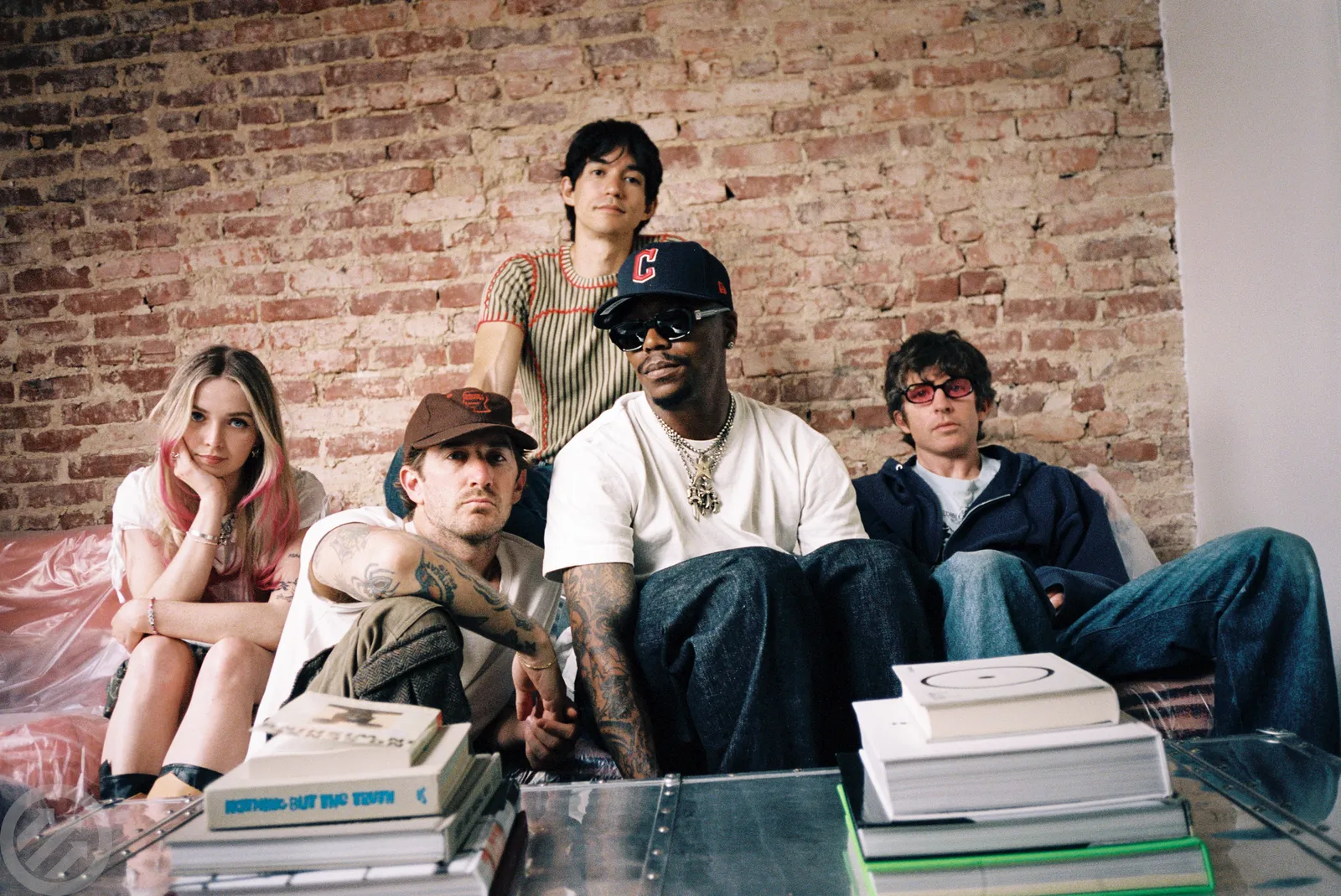
Then came Glow On in 2021, the breakthrough that moved Turnstile into a different conversation. Songs such as “BLACKOUT,” “HOLIDAY” and “MYSTERY” combined the force of a live hardcore set with hooks that could travel far beyond that world. The record earned three Grammy nominations, but its greater achievement was cultural: it helped listeners who might never have approached a hardcore record recognize something magnetic in the sound. Turnstile was not sanding away its edges for a mainstream audience. It was giving a wider audience a reason to come closer.
Onstage, that invitation becomes unmistakable. A Turnstile performance is a celebration of motion: jumping bodies, surging choruses, guitars that feel almost percussive, and a frontman who communicates urgency without sacrificing warmth. The crowd is not a passive audience watching a spectacle; it is part of the spectacle. Even as the venues grow larger, the essential feeling remains rooted in hardcore's idea of participation. There is a difference between watching energy and being inside it. Turnstile understands that difference.
The band's fourth studio album, Never Enough, arrived on June 6, 2025, through Roadrunner Records, following a four-year gap after Glow On. Produced by Yates and recorded in Los Angeles and Baltimore, the 14-track album did not attempt to recreate its predecessor. Instead, it pushed further into atmosphere, dynamic shifts, and musical risk. The title track feels expansive and searching; “BIRDS” delivers a hard-charging jolt; “SEEIN’ STARS” explores a luminous, rhythmic sensibility. Across the record, the band moves between impact and airiness without treating either as a compromise.
Never Enough also became a visual statement. The companion film Turnstile: Never Enough, directed by Yates and McCrory, presented the album as a connected audiovisual experience rather than just a collection of tracks. The project made sense for a band whose identity is inseparable from color, movement, and physical expression. Turnstile's universe is not confined to a recording studio. It extends into imagery, performance, design, and the collective imagination of its audience.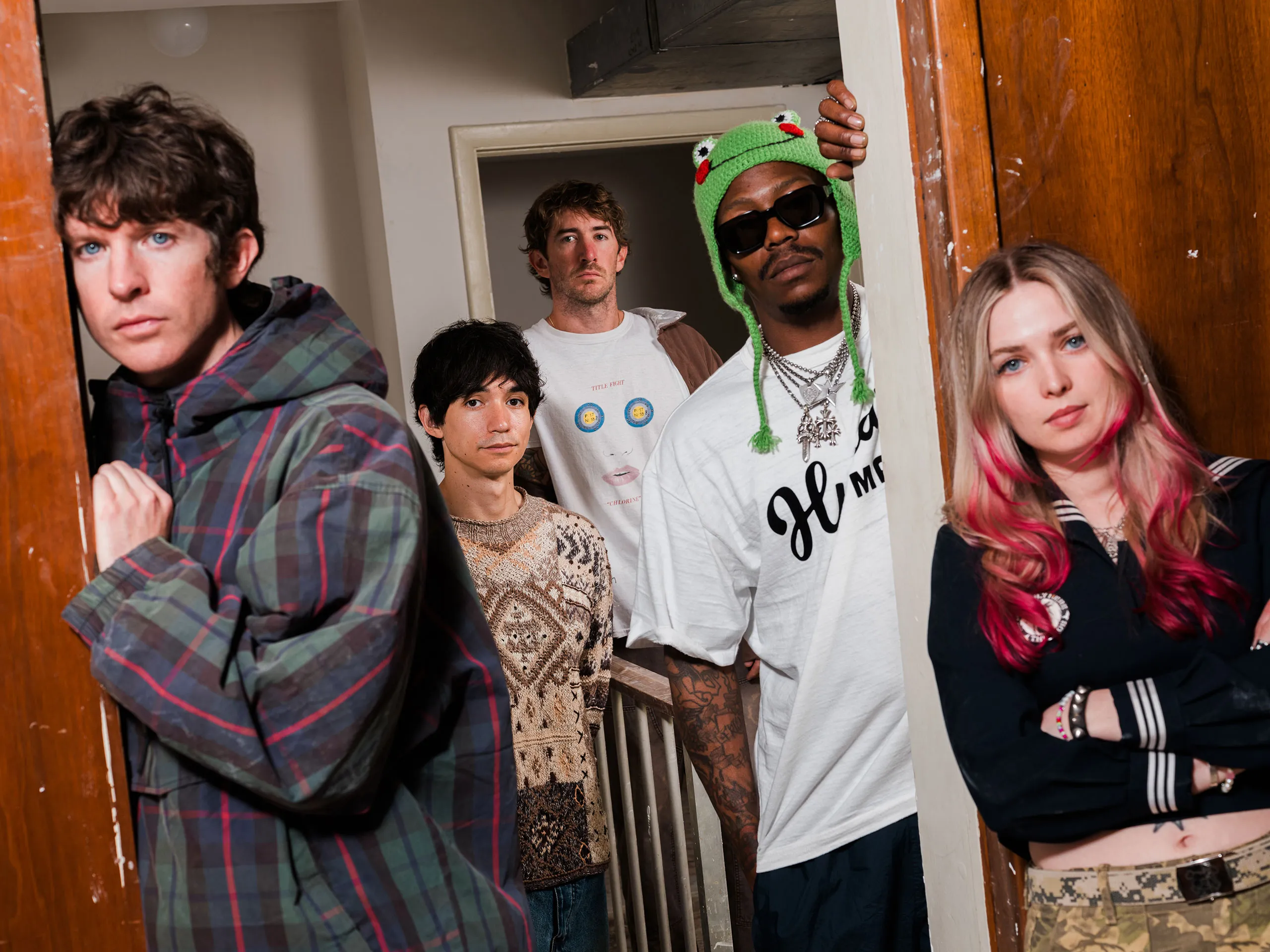
The response proved that the band's reach was continuing to expand. Never Enough entered the top ten of the Billboard 200, and at the February 2026 Grammy Awards Turnstile collected its first two wins: Best Rock Album for Never Enough and Best Metal Performance for “BIRDS.” The recognition was a milestone, but it did not supply the band's identity. That identity had already been built in independent spaces, through years of experimentation, and in the trust between performers and listeners.
By August 2026, Turnstile had found yet another way to extend the record's life. Never Enough: Versions invited a striking range of artists to reinterpret its songs, including collaborators from very different corners of music. Rather than protecting the album as a fixed object, the band opened it up. The release suggested that the strongest musical ideas can survive transformation—and sometimes become even more interesting when someone else gets to move the pieces.
That same outward-looking ethos can be heard beyond the records. In October 2026, Turnstile concluded a North American tour with a free benefit concert near the Washington Monument in Washington, D.C., drawing an enormous crowd and raising funds for humanitarian causes. The event was an unusually large expression of a principle that has followed the band since its earliest days: music can create a place where people gather around something bigger than themselves.
For younger listeners, Turnstile represents a kind of freedom that is increasingly rare in an oversaturated music landscape. A song does not have to choose between being aggressive and beautiful, experimental and immediate, local and global. A band does not have to abandon the community that formed it simply because its sound begins to reach the world. If anything, the real challenge is to carry that original sense of purpose into new rooms—and to make those rooms feel open.
There will always be arguments over labels: hardcore, punk, alternative rock, metal, something else entirely. Those arguments are almost beside the point. What Turnstile has demonstrated is that genuine excitement does not come from obeying a genre's rules or deliberately breaking them. It comes from making music with enough conviction that the rules begin to seem small. The guitars hit hard, the melodies linger, the rhythms surprise, and the emotion remains unmistakably human.
The future of rock will not be decided by one band, one award, or one festival set. But every so often an artist arrives who changes what audiences believe the future could sound like. Turnstile is one of those artists. From the Baltimore underground to the world's biggest stages, its story is still unfolding—and perhaps that is the most exciting part. For a generation hungry to feel something real, Turnstile is not merely keeping heavy music alive. It is showing how much life that music still has left to discover.